2026-08-19 07:45
I often hear walks described as preprandial or postprandial, but I never hear meals described as prepromenadal or postpromenadal.
What’s up with that?
I often hear walks described as preprandial or postprandial, but I never hear meals described as prepromenadal or postpromenadal.
What’s up with that?
I’m not so sure that there isn’t some hay to be made around insisting that AI firms should be distributing half their profits to the writers whose works they stole to train their models, but I also agree with Cory that it’d be a mistake to do that in a way that broke using the internet to provide citations for dictionaries.
If you’re interested, like I am, in how and why copyright might not be the best tool for helping writers make a living writing, you’ll definitely want to read Cory’s latest at Pluralistic:
The AI copyright fight isn’t being fought to protect your wages – it’s being fought to see whether your lost wages end up in the pockets of a tech boss or a media boss.
Source: Pluralistic: IP can’t save you from AI (18 Aug 2026) – Pluralistic: Daily links from Cory Doctorow
My brother @stevendbrewer, (who shared this with me) and I are not AI natives, or even AI immigrants. I guess we’re AI foreigners. Maybe AI refugees.
(My brother warns me “People get offended when you say ‘refugee,'” so I was all, “Ooh! I’ll post that immediately!” He claims to be more an AI refusenik, while suggesting that I’m more AI-curious.)
Oh, the humanities!
Source: Michał “rysiek” Woźniak · 🇺🇦: “I am shocked. Nobody could hav…” – Mastodon 🐘
That’s the only thing that a podcast is. If it’s not an RSS feed, or if doesn’t link to MP3 files, it’s not a podcast.
Most especially, a YouTube channel is not a podcast.
There are a lot of reasons for that, but here’s the biggest:
And now, our YouTube channel—with 26,000 subscribers—will be disabled just in time for my book launch.
Source: YouTube Moves to Ban Nerd Reich Podcast
If you have a podcast, no one can disable it. You can host it anywhere, and if your host makes you stop, you can just get another host and point your URL there. Anyone can listen to it. All they need is a any podcast app. Or even just a web browser. No one can stop you from posting episodes, and no one can stop your listeners from listening to them.
But that’s only true if you have a podcast. If you have a YouTube channel instead…. Well, in that case, YouTube can stop you.
It rained yesterday, but not all the time. I was able to get Ashley out in the gaps pretty well. After raining all night, it seemed it was going to rain all morning as well.
I offered Ashley a chance to go out on the patio, and she declined. A bit later, after she indicated that she really wanted to go out, and put on my raincoat and put the leash on her and tried to take her out the front door, but she wasn’t having it. Just a few minutes later, she came and told me she needed to go out, so I tried again, and this time I actually dragged out out the door, into the rain. But No. She went about three feet out the door, then solid turned around and headed right back.
It was a classic case of Ashley wanting to go outside, but not to the outside that actually existed. She wanted me to take her to some other outside.
So I went back to my laptop and my third coffee (twice set aside, but still warm enough) and waited for the rain to let up a little. And it did let up a little, and I got Ashley out then.
We saw an opossum! He was a Very Handsome fellow, with a white face, a naked pink tail, and sleek counter-shading on his body, (I think the sleekness may have come from being very wet.)
Ashley, of course, wanted to play with the possum, and we chased it back and forth (the possum going through the shrubs next to the building, and us going around the shrubs). At some point the possum managed to get out of sight long enough for me to drag Ashley away.
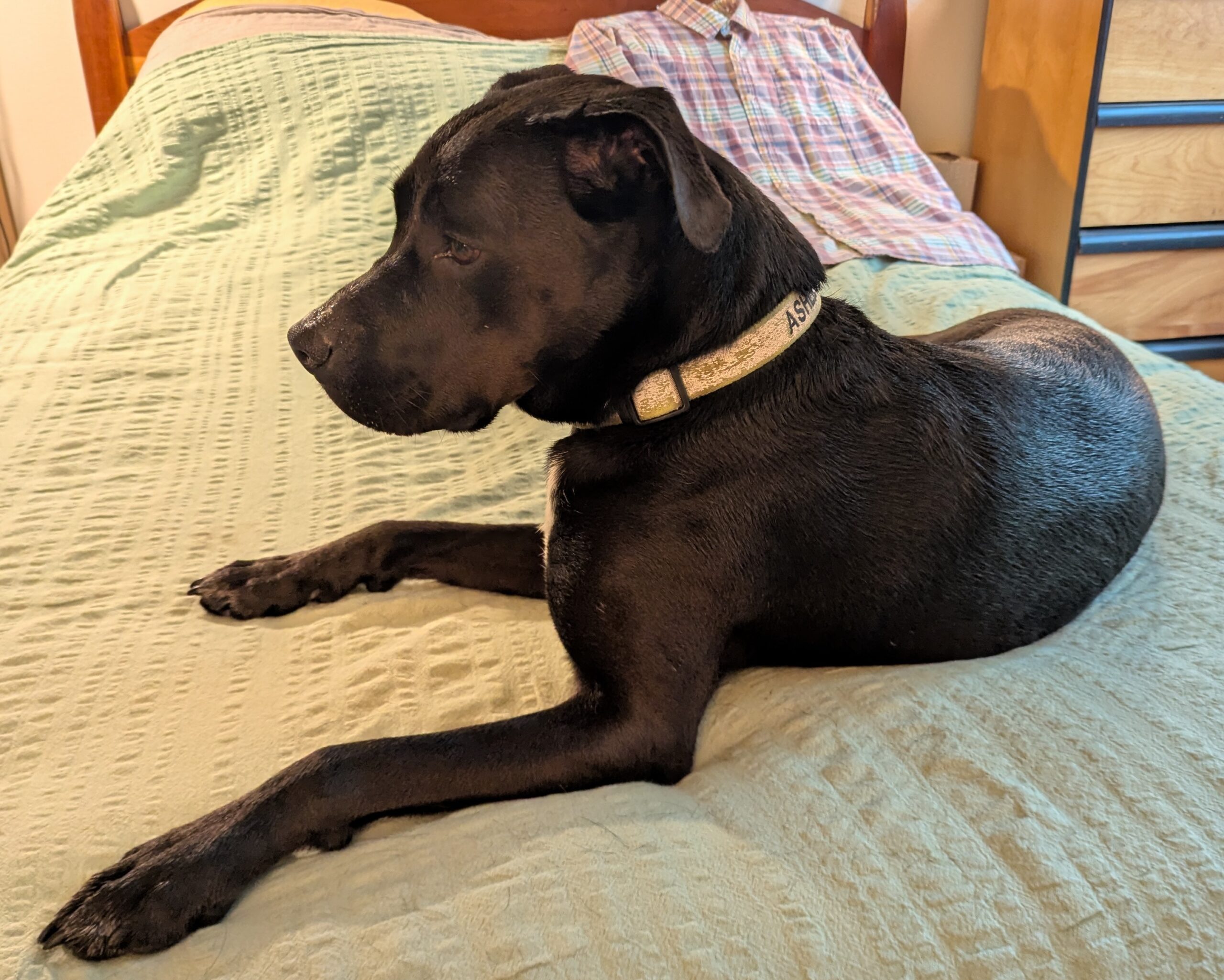
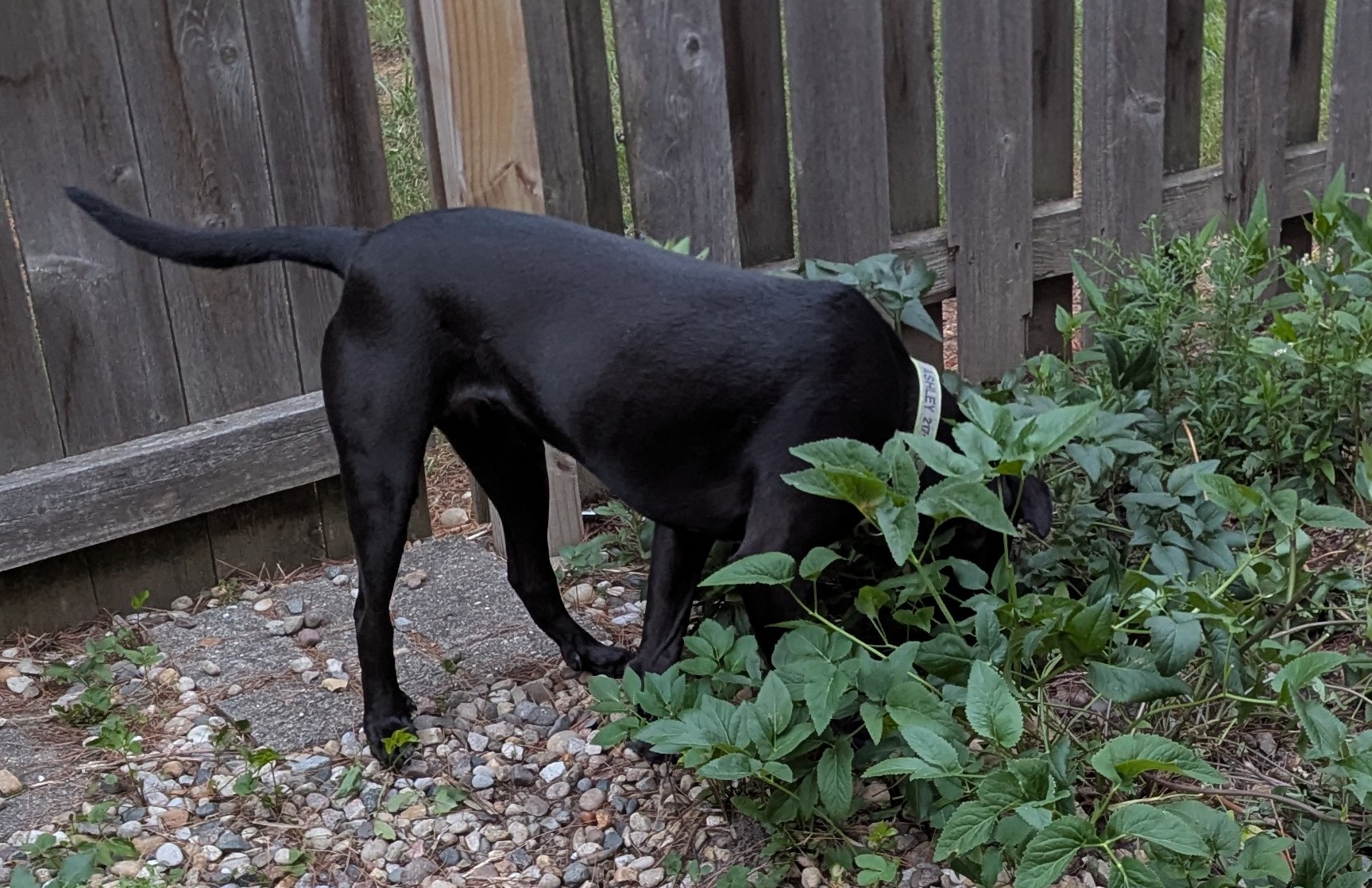
By then the rain had gotten hard again, so Ashley let me take her home, where I did my best to dry her off. But as you can see, my efforts were only partially successful.

There is a flood warning. I’m always a little amused by flood warnings in Central Illinois, because it is so, so flat here. Yes, it is flooding. The little creek is over its banks, sorta. But as soon as it gets over the top of its banks, the water just spreads out. Before it could get high enough to threaten my house (a few feet above creek level), the water would have to flood literally thousands of acres all around us.
I really like summer. I even like the heat, but I especially like long, sunny days. However, even for me, the longest days of summer are kinda. . . . long.
What’s perfect is the day length in, let’s say, July. When the sun rises no later than 6:00 AM, there’s daylight to wake me up when I want to get up. And when the sun sets around 8:00 PM, it gets dark right around the time I’m ready to wind down ahead of getting ready for bed.
As we head on to mid-August, though, although the temperatures are still fine, I’m no longer so happy with the sunrise and sunset times. Today the sun didn’t rise until 6:04, which isn’t much after 6:00, but is a sign of the approaching dark days. Similarly, it’s been a full week since the sun was still up at 8:00 PM—another sign.
This morning I realized that I should refer to these two things—sunrise after 6:00 AM, and sunset before 8:00 PM—as two horsemen of the Darkpocalypse.
Back in the days when I had to work in an office, this mid-August transition would ruin the fall for me. I’d get so wrapped up in dreading the winter, that I couldn’t enjoy the objectively great conditions of the second half of August, all of September, and usually most of October as well. It was very sad to have nearly a quarter of the year ruined that way.
I should probably add a “darkpocalypse” tag, and go back and put them on all my posts about SAD.
Horsemen traditionally travel in groups of four, but if there are two more, I haven’t identified them yet.
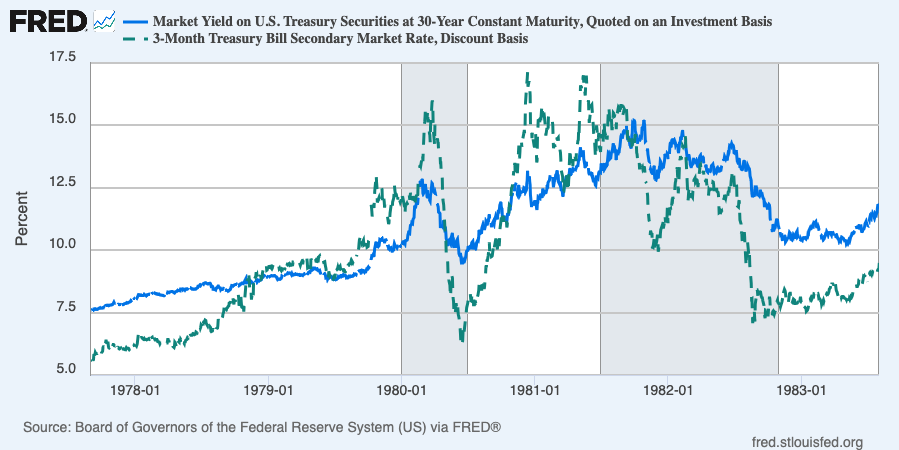
I’ve been warning about the current stagflation since the beginning of last year. It’s good to see others are catching up.
Stagflation, the Scourge of the 1970s, Is Back by Phillip Braun
One point the opinion piece makes is that the one bright spot in the economy—the stock market—is actually (in line with what I’ve been saying about how the markets and the business news have this all completely wrong) a “severe systemic risk.”
Some years ago, I wrote an article on living off capital and published it as a guest post on another financial blog. The old link to it is dead, and a google search doesn’t turn it up any more, so I thought I’d go ahead and repost it, hosted here on my own blog.
People who come from wealthy families learn how to live off capital. The rules are taught along with all the other things they learn from their parents—how to dress, how to eat, how deal with bankers and trust officers. But even though most people don’t learn the rules, living off capital is just a skill, and it’s one that everybody should learn, because everybody lives off capital sometimes.
People usually think about living off capital in the context of retirement, but that’s just one (albeit important) example. Perfectly ordinary transitions, such as losing a job and having to find another, also amount to living off capital. There is also the broad swath in between: Living off capital for longer than just the length of time it takes you to run through your emergency fund, and doing so without the institutional support—social security, medicare, maybe even a pension—that comes along with retiring at an ordinary retirement age.
If you’ve got a lot of capital—that is, if you’re wealthy—then living off capital is easy: You invest enough in treasury bonds that you can live off the interest.
It’s not trivially easy, of course. You have to allow for taxes. You have to allow for inflation. You have to have some sort of cushion or reserve in case your investment return falls. But, generally, living off your income is straightforward.
You allow for taxes by setting aside enough of your income to pay your taxes. This isn’t hard, even if you have to file quarterly estimated taxes, but you have to do it yourself; you don’t have an employer automatically taking care of it for you by deducting it from your pay. Screwing up is expensive—screwing up badly may even be criminal.
You allow for inflation by reinvesting enough of your income to preserve the value of your capital. If your money is in US dollars, TIPS (Treasury Inflation-Protected Securities) will do exactly that. The principle value of the bonds increases automatically to keep you even with inflation, and the interest is paid out on the inflation-adjusted principle, so your income rises with inflation as well.
(The adjustment is based on the Consumer Price Index while what matters to you is your own cost of living, so you can’t entirely delegate the job of allowing for inflation, but TIPS will do most of the heavy lifting.)
You allow for reversals by having a cushion somewhere. Ideally, have two cushions: First, a reserve fund with enough money to cover any unexpected expenses. Second, some flexibility in your cost of living, so that a decline in income can be matched with a decline in spending.
The wealthy have other concerns than just supporting themselves—they want to pass down an estate. Because of that, they teach their kids this rather conservative version of living off capital. If you only spend your income, and if you reinvest enough to keep even with inflation, then you’re preserving your capital intact. (If you reinvest more then the minimum, or if some of your capital is invested for growth, than you can be growing your capital at the same time you’re living off it.)
If leaving an estate is not a concern for you, then you can spend more than just your income.
There’s a common rule of thumb that (if you have a well-diversified growth portfolio), you can probably spend about 4% of your capital and still expect to have more capital the next year. That won’t be true every year (it was really, really not true in 2008, for example), but historically it’s been true on average.
Still, the wealthy know that spending capital is a bad idea. Anytime you spend more than your income, you’re in danger of entering a death spiral: Your reduced capital earns less money so you have to spend even more capital to support your standard of living; repeat until broke.
A lot of people have back-tested versions the 4% rule, looking at historical periods to see if following that rule ever led to a death spiral. From what I’ve seen, it looks pretty good, but the current circumstance is going to put it to a particularly harsh test–especially for people who started living off their capital in 2007.
If you can afford it, choosing to spend only income is a safer strategy. If you can’t, you probably ought to accept that at some point you’ll have to earn some more money—and if you’re going to do that, sooner is probably better than later (before you’ve depleted your capital). Happily, a pretty small amount of money can make a big difference, if you’re right on the edge of being able to live on capital. Every dollar you earn is a dollar of capital that can go unspent.
If you were really rich, the safest thing to do would be to invest enough in TIPS that the income would support you. Then you could invest the rest of your money however you liked. Most people aren’t that rich—at the moment you’d need close to $2.5 million invested in TIPS to earn an inflation-protected $50,000 a year. Treasurys without inflation protection are earning more than twice as much. (Of course, you have to reinvest a big chunk of that to keep even with inflation).
Dividend-paying stocks can earn still more money, and dividend growth can provide some amount of inflation protection (as can capital gains). in recent years it has been tough to invest for dividend yield, but even with the recent recovery in the stock market, there are plenty of companies paying a reasonable dividend now—there are more than 40 companies in the S&P 500 whose dividend yield exceeds the yield on a 30-year treasury. None of those will be as safe as treasurys, but at least there are some options now for someone looking for income.
If you have it in you to be a landlord, there’s also the option of earning rent on real estate investments.
You can arrange the mechanics several different ways. The simplest version is simply to have the income from your investments directed into your checking account and use it to pay your bills. A slightly more complicated version would direct your income into the savings account where you keep your reserve fund, and then transfer money from there into your checking account. That makes it easier to even out the month-to-month money flows, which tends to be necessary because stocks generally pay dividends quarterly and bonds generally pay interest semiannually.
(If a lot of your capital is tax-sheltered in an IRA, 401(k), or similar vehicle, the tax rules make it more complex to use that capital for spending, but there are rules for handling the case when you’re actually retiring early.)
The key step–the one that rich families make sure that their children know—is to evaluate your capital every year: Make a new budget with your projected expenses for the following year, and then reinvest enough of your surplus that its earnings will cover any increase in your cost of living.
If you don’t have enough of a surplus to do so, you were living beyond your means.
It’s easy to do this by mistake. Even most people with a budget don’t know their cost of living accurately enough to know if they’re properly accounting for things like those large-but-rare expenses like a new car or a new roof, and any particular category of expense can rise much faster than overall inflation. (Think health insurance, college tuition, and fuel.)
People who are accumulating capital (rather than living on it) can use each year’s new savings as a buffer—even a major un-budgeted expense can often be covered out of this year’s planned savings without needing to dip into capital. Someone already living off capital doesn’t have this option. They have to provide their own buffer out of their reserve.
There’s a second reason that a reserve is essential: The income earned by capital fluctuates. Anyone living off capital right now knows this quite acutely—the rate paid on Treasury securities is at generational lows. Other investments (such as dividend-paying stocks) earn an income that doesn’t necessarily shift in lock-step with treasurys, but can still go down—particularly during a recession.
The children of rich families learn that the key technique for stabilizing your earnings from capital is diversification.
You should diversify across time by investing some of your money in long-term treasurys, which will pay a fixed rate for a long period (decades). That offers some stability, but has two downsides. First, it while it protects you from falling rates, it makes it harder to take advantage of rising rates. Second, if all your treasurys mature at once, you might have to reinvest the whole sum at a much lower return. Avoid that making sure that your long-term securities mature in a staggered fashion. (Arranging for a fraction of your long-term securities to mature at regular intervals is called setting up a ladder.)
You should also diversify across kinds of investments by investing in more than one kind of vehicle. As attractive as TIPS are for someone living off capital, you probably want to have some of your money invested in ordinary treasurys, in stocks, and maybe in real estate. Other options (such as owning a business) are worth considering as well. This reduces the chance that your income streams will all fluctuate in the downward direction at the same time.
Other kinds of diversity are good as well. Consider investing in foreign treasurys as well as US issues, and maybe in corporate or municipal bonds.. Your stock investments should include multiple companies in different industries, and should include foreign companies as well as domestic ones.
The other key for dealing with a fluctuating income is to have a flexible cost structure, so that you have the option to cut your expenses, if necessary, to match your diminished income.
Those are the basics:
Learn those skills and you’ll have as much ability to live off capital as someone who grew up in a wealthy family. Then you just need the wealth.
I’m a little surprised people are still studying this, since it’s been studied before with the same results:
After 12 weeks, researchers found no meaningful differences in weight gain, body composition, or cholesterol levels between people following the low-dairy diet and those eating three servings of dairy each day. Participants consuming more dairy, however, showed improvements in blood pressure and consumed more calcium, protein, and vitamin D.
“Those that had three servings of dairy didn’t have adverse levels of blood cholesterol or lipids or evidence of insulin resistance,” says Anderson.
Source: For decades, we were told to choose low-fat dairy. New research says otherwise | ScienceDaily
I would argue that that full-fat dairy is “minimally processed.” (Mixing the milk of multiple cows, pasteurizing, and homogenizing, means it’s not unprocessed.) I argue that skimming off half (or nearly all) of the fat crosses the bar to “processed,” but even if you don’t draw that line where I do, it’s still more processed. And just on general principles, I generally assume that less-processed food is better than more-processed food.
But with full-fat dairy you don’t have to go by general principles. We have multiple studies over years and years that show unequivocally that it’s healthier food.
And, I guess, now we have another.

That’s not what I learned in 4th grade.
If, like me, you had any sort of reasonably balanced portfolio at the beginning of the year (or the beginning of last year), it’s worth observing that it is almost certainly way, way out of balance.

If so, this is your reminder to rebalance your portfolio.
Doing so is admittedly really hard to do. If you had a 60:40 (stocks to bonds) portfolio at the beginning of last year, you might very well have 70% or 80% invested in stocks now, and that probably feels great. You feel like a genius, letting your profits run. If there’s anything better than having 60% of your portfolio grow at 20% a year it’s having 80% of your portfolio grow at 20% a year.
But you know it’s a terrible idea. It’s bad enough to have 60% of your portfolio lose half its value. Having 80% of your portfolio lose half its value is much, much worse.
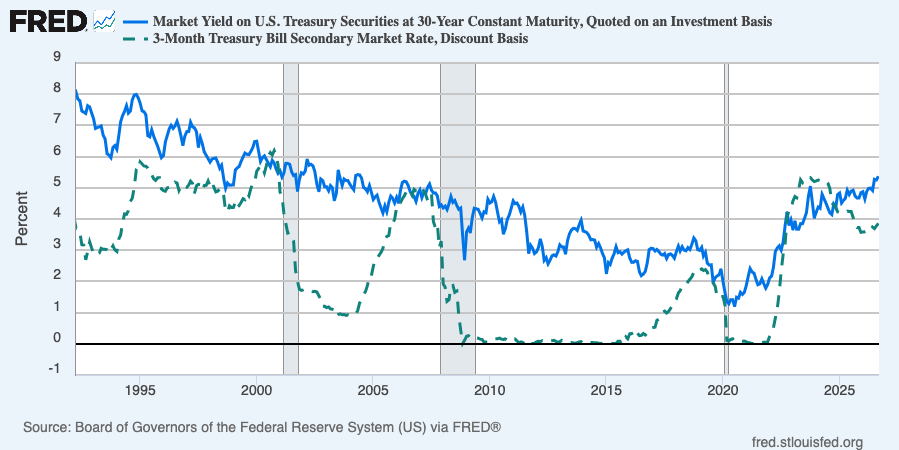
Knowing that it’s hard, let me point out a little thing that might make it a little easier right now: Bond rates are up nicely. You can get nearly 5.25% on 30-year bonds, or almost 3% on inflation-adjusted bonds. That’s good enough that you don’t really need to agonize about whether you can expect a capital gain or capital loss on the bond. Just buy it and take the coupon.
Of course, I have no idea what balance is right for your portfolio. Maybe it’s 60:40. If you’re young, maybe it’s 80:20. If you’re retired, maybe it’s 35:65. But if you had a sensible balance a year or two ago, and you haven’t rebalanced, it is now way out of whack.
This is your reminder to fix that.
My brother just got email asking if he’d ever thought about upgrading his website with “an engaging video to explain what you do?”
My reply was:
Ooh! An engaging video!! I never thought of that!
I figured I’d go with either a tedious video or an annoying one.
That’s what everybody else does.
Steven pointed out, “I don’t think a video that actually explains what I do would be very engaging.”
Light exposure is good for you. All the different frequencies are good for you. This has led many people to try to tweeze them apart: tanning beds, red-light panels and masks, therapy lights, etc. It turns out, sunlight is best consumed whole, just like food.
I should mention that by inclination, I’m rather vulnerable to getting this wrong. I wrote at some length about how, because of the sort of person I am, I simply like the idea of figuring out all the nutrients I need, and then trying to construct a diet that provides all those things. Similarly, I like the idea of coming up with a perfect workout plan, and then getting all the movement that I need by hitting all the right exercises. But, if you follow that link, you’ll see that I eventually realized the whole notion was just wrong-headed.
There is no need—in fact, no value—in tweezing apart the nutrients in food. Just eat a varied, whole-food diet and your body will get it right. The same with movement. Just engage in a wide range of diverse movement, and your body will become highly capable of moving in all those ways, (and if your “movement diet” is adequately diverse, your body will become fairly capable of all sorts of movements you don’t even practice).
The same is true of sunlight. That’s the main message of In Defense of Sunlight: The Surprising Science of Sun Exposure by Rowan Jacobsen.
The book is consciously modeled on Michael Pollan’s In Defence of Food, which systematically destroyed the notion that you could build up a diet that optimized all the nutrients. And it’s message is very similar. Sunlight is best consumed whole, just like food.
All of the different frequencies are good for you:
“But what about skin cancer!?!?” I can hear you asking from here.
The book is well worth reading, because just the information on skin cancer is worth the price of the book (and it takes half the book to adequately deal with the subject). Because there’s so much of it, it’s not really practical to try to summarize it here, so I’ll just mention that “Don’t get sunburned” is much better advice than “Put on sunbock,” or even “Stay out of the sun.”
I figured this out years ago. I’ll use sunblock if I’m going to be out in the sun so long that I might get sunburned—I needed it for a snorkling trip to Buck Island, for example. Otherwise, I use a combination of changing my clothes, taking advantage of shade, and limiting my time out in the midday sun. But I don’t minimize my time in the sun. I maximize my time in the sun, while making sure not to get sunburned. At this point in the summer (having gotten a modest amount of sun every day since the weather turned warm) I’m okay for up to about 40 minutes of mid-day sun. And I try to get that nearly every day.
Here’s one statistic, that I’ll let stand in for dozens of others about the advantages of sun exposure. The UK Biobank has data on health outcomes for hundreds of thousands of people. A researcher Jacobsen mentions went in and counted:
… in the fifteen years of tracking, a total of 40 people had died from skin cancer attributable to too much UV light, while 2,982 people had died from diseases attributable to a deficiency of sunlight.
The final third of the book is about artificial light, and makes the case that too much light at night is just as bad as too little light during the day.
Again, this is something that I figured out long ago. All the “sleep hygiene” stuff makes it clear that you want your sleeping space to be very dark, and there’s no doubt that getting enough high-quality sleep is probably the best thing you can do for your health, maybe even above good nutrition and plenty of exercise.
The prescription is almost trivially easy: Get outside at dawn. Get as much sunlight as you can without burning during the day. Within a couple of hours after sunset make your space as dark as possible and get some sleep.

In Defense of Sunlight: The Surprising Science of Sun Exposure by Rowan Jacobsen. Highly recommended.
A guy I follow on micro.blog, after having to go through four or five steps just to read a Substack post, posted “Substack? What are you for?” To which I replied: “As near as I can tell, it’s there to monetize the writing of Nazis, with enough non-Nazis to provide some cover for the firm.”
My brother chimed in to point out, “You can subscribe to nazistack blogs with an RSS reader,” which is something that I hadn’t really thought about.
I’ve been avoiding any newsletter on Substack for a couple of years now, because of the “Nazi bar” problem. Even so, I’ve ended up with a couple of subscriptions to Substack newsletters, because a couple of non-Substack newsletters I subscribed to moved there, and Substack let them just subscribe me without asking. And because I wouldn’t have subscribed if I wasn’t interested, I didn’t unsubscribe from every one of those.
Now, though, based on Steven’s good idea, I’ve gone in and added those newsletters to my RSS feed. Now I can unsubscribe from those newsletters, and still see their content—in my feeds, which is the best place to see it anyway!
AI firms are on the ropes, having spent way too much money building infrastructure for tools that are valuable, but not nearly valuable enough to support the money already spent, let alone what they’re planning to spend over the next two or thee years. This is bound to come to a bad end.
As Jerry Holkins puts it:
They can only loan each other money for so long. Then, they’ll socialize the losses through nationalization.
Source: Cyberbullies – Penny Arcade
At least, that’s their plan. Oliver Jutel and Gil Duran have a name for this plan: “exit through the state.”
Because I’m at heart an optimist, I like to imagine a more hopeful solution—one where this plan fails. And I legit think it might.
If Congress changes hands, and Trump becomes even more toxic (two things that seem very likely), there might not be anybody in a position to lead the charge for socializing the losses. A toxic Trump trying to hand another bunch of taxpayer money over to billionaire tech bros might actually be very unpopular. And if a Republican minority in Congress can’t get it together to come up with a plan that a significant number of Democrats will support, socializing the losses just might not happen.
But it has to “not happen” right then—with a Democratic (or divided) Congress.
If the AI firms can hold things together (with circular financing, SPVs, and the like) until there’s a Democrat in the White House, that guy will probably not be able to resist the pressure to “do something.”
If—as I hope, and kind of expect—it comes to a head before that, the Republicans might well not be able to come up with a plan that meets the demands of all their different constituencies, while the Democrats refuse to join in any plan that a large subset of Republicans will agree to. The result might just be that we just let the sucker go down.
Letting the sucker go down is what George W. Bush wouldn’t do in 2008. Except, of course, he kinda did, as far as homeowners were concerned. Banks, investment firms, and insurance companies got saved. Homeowners got hung out to dry.
My point being that the government is totally willing to let some suckers go down. The Republicans would like those suckers to be ordinary investors, computer users, and (in particular) tax payers. But I like to imagine that there’s at least some chance that the politicians will simply be unable to cobble together an arrangement to accomplish that, with the result that the AI firms go down, a bunch of AI firm executives get prosecuted for investment fraud, and all that infrastructure (data centers and large language models) gets sold off in bankruptcy, ending up in the hands of people with a certain amount of rationality (and much less debt).
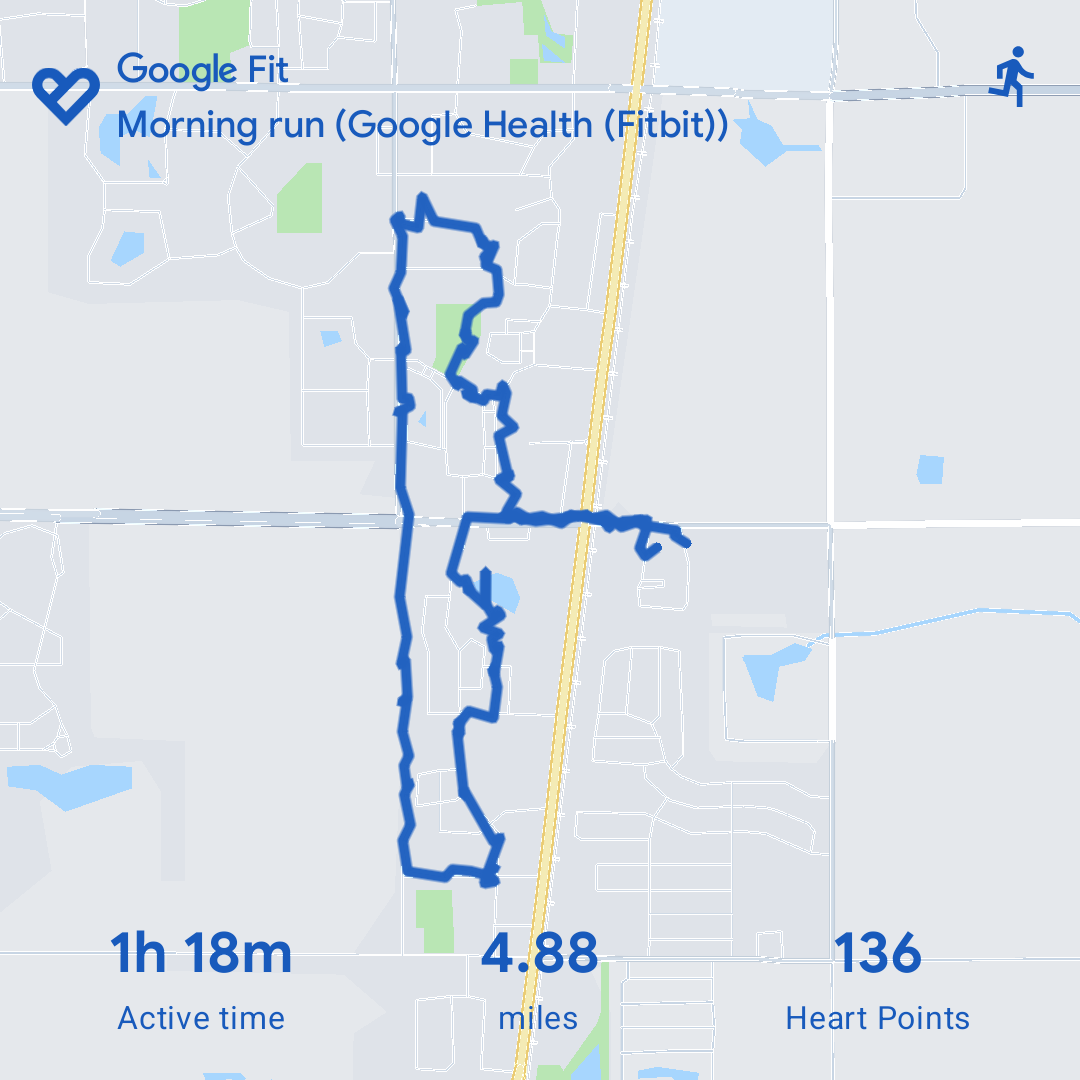
It was a very nice day today—moderate clouds, not too hot, no rain—so I decided to go for a run.
I haven’t actually compared it to other runs this summer, but I’m pretty sure it’s my longest and my fastest.

4.88 miles in 1h 18 min.
I really mean to do two runs a week, but I’m probably not managing even half that. But this run still felt okay. I was tired at the end, but not too tired. My joints felt fine during the run.
Basically, it’s all good.
A few weeks ago, back before the Iran war heated back up, The Economist wrote a mia culpa, explaining why they’d gotten it wrong about the war being an economic disaster. Briefly, while the MOU was holding up, I was tempted to write my own.
Like The Economist editors, I had thought back in April that Things are amazingly more bad than markets seem to think, but by the beginning of June, it was looking like maybe the risk of catastrophe had eased.
I didn’t write a mia culpa. To be fair, part of that was just laziness. But part of it was looking at things and thinking I was still right. Maybe between some demand destruction and some dribs and drabs of oil getting through the strait, world markets had found a new equilibrium that wasn’t nearly as bad as I’d expected.
The Economist thought so. They thought they’d gotten it wrong for two reasons:
First, we thought that America and Iran would hold out against a deal to reopen the Strait of Hormuz: America because Mr Trump deludedly thought he held the whip hand, Iran because its regime knew its people could be made to endure more pain. In fact, facing the fury of American motorists, Mr Trump all but folded, preventing a disaster. Since the two parties struck a provisional deal in June, enough oil has been getting out of the Gulf to reassure markets that supply is coming back online, even if the future of the strait remains uncertain.
Our second oversight was, like others, not anticipating the staggering degree to which China would be able to slash its oil imports. Crude imports are 5m barrels a day lower than a year ago, despite the fall in prices. China has cut its demand and shored up supply. Its oil reserves are opaque—many barrels are hidden from satellites underground, and there is a blurred line between official reserves and corporate inventories. But they have been shown to be a powerful buffer.
I pretty much bought their second point. China had produced a truly fantastic amount of demand destruction, and had done it with minimal impact on their own economy, by largely shifting the impact onto people in other countries who had bought their oil distillates, before China prohibited exports. They could probably keep that up indefinitely, removing their demand from the world market.
That first point, though, I found doubtful. I mean, yes, Trump always chickens out, which is why we got the MOU and the briefly partially reopened strait. But I think they were wrong in thinking that Iran would go along with what Trump wanted, or that Trump could settle for what Iran would (obviously) want to do. They tried to paper over the cracks for a few weeks. I mean, I believe Trump settling for whatever Iran did and pretending it was a victory was a thing that could happen. But I’m not surprised it didn’t work out. Too many other people in the U.S. government were simply unwilling to let Trump leave the strait in Iran’s hands. And, although oil prices were coming back down, they were not on a trajectory that would improve the Republican’s chances in the midterms.
So, I think The Economist was right in the first place, and wrong to imagine that Trump and Iran could agree that “preventing a disaster” was something they could do.
The oil price graphic above is already out of date. It shows yesterday’s closing price, and things have gotten worse already today. Brent crude is over $100 as I wrap up this post.
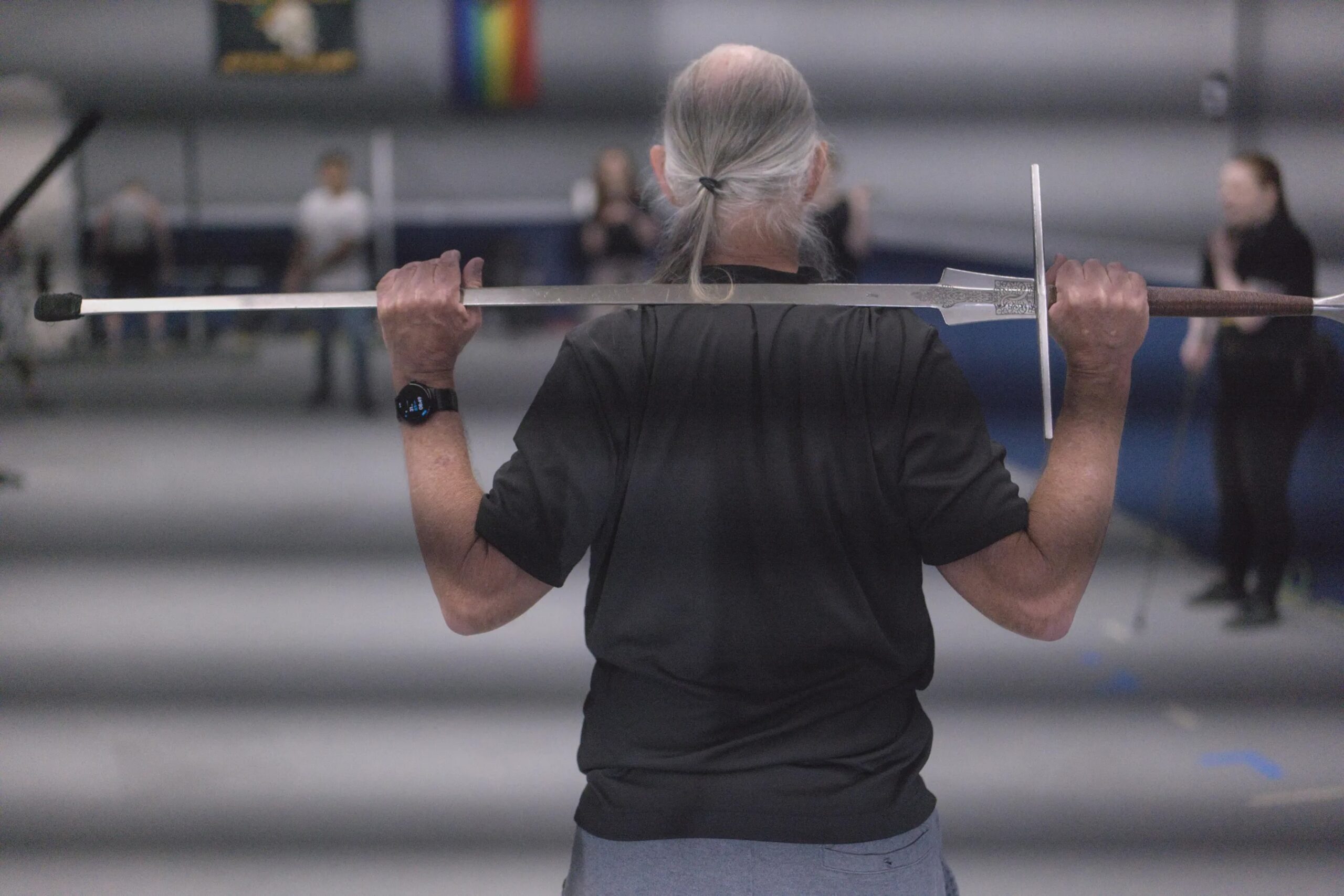
On Saturday my local HEMA group, Tempered Mettle Historical Fencing, had a guest instructor come to teach a one-day class aimed at “underrepresented groups.” The guest instructor was Kaethe Dundon, “a Chicago-based queer nerd whose major interests are in history, art, and textiles, and of course historical martial arts.” The class was pitched thus:
The primary audience of this workshop includes women, those of other marginalized genders, and those with physical disabilities. Those who are male and able-bodied are welcome to attend – but be aware that your experience will not be the focus of this class, and be ready to primarily take the “losing” role in reps.
I was down with that, so I went. It was a great workshop. A lot of the focus was on stance and footwork, which are two things you can never do too much of.
One member was taking pictures. Trying to be less of a distraction, he switched his camera to “silent,” which turned out to have an odd interaction with the LED lighting in our training space:

I think the photo turned out great!
The posture with the sword across our shoulders was intended to get us to open our chest, so our arms and shoulders would be where they were supposed to be for longsword.
The notion that “SpaceX’s ambition to put data centers in space” makes more sense than putting them in North Dakota, Alaska, Siberia, and maybe Tierra del Fuego or the Falkland Islands suggests that a bunch of people have no sense at all.
I’m using “AI” here in the older sense, rather than the newer sense where it’s just another way to say LLM.
In this older sense, I don’t have anything against AI (even though I generally try to avoid LLMs). So, I thought I’d talk a little about the things I actually object to, when it comes to what people call AI these days. Specifically, what I object to (in order of objectionableness) are:
I do also have some good thoughts. Generally speaking, there’s all kinds of stuff that (I hope) is going to get a lot better. Here’s an almost random sampling of ideas I’ve had. This list is most definitely not comprehensive. It’s not even the most important stuff. It’s just a few things I have been thinking of, because they’re things I want.
I would like an AI to keep track of everything I read (including whether I finish reading it, or give up part way through), and then (insted of trying to sell me something), guess what I’d like to read next. I’d pay money for this. (Not much money, but a little.)
I’d like an AI that picked up domain information what what I read. When I read an economics or finance article, I’d like it to put a little note over on the edge of the screen that I could click on, and then it would apply the information in the article to my situation. “That article, and three others that you’ve read in the past two weeks, suggest that European stocks might do better than U.S. stocks over the next year. Your portfolio is 43% U.S. stocks and only 16% European stocks. Click here for steps you could take to boost your European stock holdings.”
Of course, it should also track future results of each of those hypotheticals and compare them to both what I had before and what I actually did.
I’d like an AI to look at a blog post I’ve written and then from the taxonomy of categories and tags I’ve already created, suggest which ones I should use for that post. (There have long been “tag recommending” plugins for WordPress, but the last time I checked, none of them preferred the tags I’ve already got. Most of them seem intended for a completely different purpose from supporting your own internal tagging system. It seemed like maybe they were intended for finding keywords for maximizing ad revenue?)
I couldn’t think of a good picture for this post, but didn’t want to post it without a picture, so I thought I’d use this picture of my dog. It’s been hot here.

My brother asked me today, “Which author do you think best immanentizes the eschaton?”
Not being a moron, I immediately replied, “Obviously it’s Charlie Stross.”
Before I could finish typing that, he suggested a Mastodon poll to ask people, to which I replied, “The poll should be ‘After Charlie Stross, what author next best immanentizes the eschaton?'”
We speculated a bit, throwing out names like William Gibson, Bruce Stirling, Neal Stephenson, and Cory Doctorow.
I assume this was all prompted by the most recent Pluralistic, in which Cory Doctorow says, after explaining why, if their AI is so close to having god-like powers, anyone would be asking for money for their AI, when they could just be using the AI to make money for them, says:
So it’s not surprising that we don’t ask why these AI god-botherers need our stupid money while they’re immanentizing the eschaton. Why would they operate a hospital if they could go meta and sell the doctorbots to the MBAs running the hospital?
Source: https://pluralistic.net/2026/07/13/go-meta-meta/#meta-meta-meta
Anyway, at this point I put the question to confer.to (so I don’t know which AI model responded), but it gave me a great reply:
The Core “Eschaton Immanentizers” (Closest to Stross)
1. Vernor Vinge ⭐
- Why: He literally coined the term “technological singularity” in his 1993 essay. Stross stands on Vinge’s shoulders.
- Key Works: A Fire Upon the Deep (zones of thought = different physical laws based on intelligence density), A Deepness in the Sky, Marooned in Realtime.
- Vibe: More optimistic than Stross, but equally committed to the idea that superintelligence changes everything, including physics.
2. Greg Egan ⭐⭐
- Why: If Stross is the journalist of the singularity, Egan is the mathematician. He goes harder into the ontological breakdown. His characters upload, fragment, merge, and cease to be human in ways that make Stross look cozy.
- Key Works: Permutation City (simulated reality, consciousness as substrate-independent), Diaspora (post-human civilization across dimensions), Quarantine (reality modification).
- Vibe: Colder, more rigorous, less humor. The eschaton isn’t just immanentized; it’s proven.
3. Hannu Rajaniemi
- Why: Writes about societies that already live in the post-singularity world Stross describes arriving.
- Key Works: The Quantum Thief trilogy (solar system transformed by post-human technologies, memory as currency, gogolized consciousness).
- Vibe: Dense, playful, requires work—but depicts the aftermath of eschatonization brilliantly.
4. Ken MacLeod
- Why: Stross’s contemporary and friend; they share a intellectual milieu (Edinburgh SF scene). MacLeod explores similar themes but often from a more political/ideological angle.
- Key Works: The Fall Revolution series (The Star Fraction, The Stone Canal), The Execution Channel.
- Vibe: More focused on how ideologies (libertarianism, socialism, etc.) interact with singularity tech.
I mean, really, I don’t know why we didn’t have Verner Vinge in mind, or Greg Egan. I’ve read both, and I’m sure Steven has as well. They’re obviously on top.
I don’t know if Steven has read Hannu Rajaniemi, but I’ve at least read The Quantum Thief, and, yes, I’d put him on this list.
The AI also rather dismissed our guesses:
Your Guesses, Evaluated
Author Verdict Notes William Gibson Adjacent Cyberpunk is pre-singularity. His later work (The Peripheral) touches on it, but he’s more about near-future tech’s social impact than ontological rupture. Bruce Sterling Adjacent Same as Gibson—cyberpunk pioneer, but more interested in design, aesthetics, and near-term futures than the actual singularity event. Neal Stephenson Partial The Diamond Age and Snow Crash have elements, but he’s more interested in memes and social structures than the hard break of singularity. Anathem gets closer. Cory Doctorow Partial Writes about these themes (especially in Walkaway and Makers), but with a more accessible, activist, optimistic lens. Less “reality breaks,” more “how do we organize after tech changes?”
The AI actually goes on a bit, mentioning several other authors including Richard Morgan, Ted Chiang, and others, but I’ll just go hang my head in shame rather than copy and paste more AI output.
(Normally my posts are entirely my own writing. This post is an exception, in that it includes a bunch of copy/pasted AI output. I think it’s adequately tagged, though, and it’s clear that I’m not trying to pass off AI output as my own writing. Because I thought it was funny, I also generated an AI image to be the “featured image” for this post. Once again, I hope it’s clear that I’m not trying to pass off AI output as my own.)
Do you use an activity tracker? I have an Oura ring, a Google Pixel watch, and a phone which runs Google Fit. All of those count my steps, and each one does some additional activity or sleep tracking. I find them all fun and interesting, so I’m always amused when yet another article comes out warning of the dangers of activity tracking.

The article at the moment is this one, sent by my brother: Five hidden pitfalls of fitness tracking, by Sahar Bakr.
I mean, sure. If you’re really foolish, you can be seriously led astray by one of these. But you’d have to be really foolish. It’s like the early days of GPS map software, where they’d be giving you directions and say, “Turn left!” but if you turned left you’d end up in a creek. Sure, you could do that, but all you had to do was look where you were going, and you could avoid it pretty easily.
Although the article has five items, there are, I think, two fundamental issues that Bakr is warning about. The larger one is outsourcing our good sense to some external device. The smaller is an excessive focus on step-count as the measure of fitness activity.
Letting a device tell you to push hard when you’re feeling crappy is just stupid. (It is perhaps somewhat less stupid to let a device tell you to take it easy when you feel great. I have several times decided to push hard because I felt great, even though one of my devices was warning me that I wasn’t fully recovered. More than once when I did that, I ended up having a crappy workout, because the device was right and I was wrong.)
With their fixation on steps (because that’s easy for a device to measure), devices have a pretty limited insight into the full scope of your movement practice. This means that they’re never going to know if your strength training is covering all the major muscle groups, or if your volume and intensity are on point. But that’s not really different from training without a device. Really, it only makes things worse if you’re so foolish as to imagine that it’s got some insight into stuff other than your steps and heart rate (or whatever else its measuring). Just like it doesn’t know enough about your strength training to provide useful advice there, it also doesn’t know much about your skills training or your flexibility training.
A lot of my training is focused on specifically increasing the sort of fitness I need for my HEMA practice. None of my devices even tries to guide me as to whether I should do less lunging practice in favor of overhead pressing practice or vice versa. (And if they did, I wouldn’t pay much attention, unless they’d started getting me to upload my sparring footage. And maybe not then.)
Getting back to the fixation on steps, the device makers want to pretend that step counts gives them some sort of deep insight into a human’s movement practice, with a one-size-fits-all target of 10,000 steps.
Weirdly, I don’t think that’s crazy. I mean, steps are by no means the only aspect of a human’s movement practice that’s important, but it’s actually not a bad proxy.
Over an evolutionarily long period, walking and running have been critical to human success. Running and walking were key to our successes in both hunting and gathering, and probably led directly to our big brains.
All three of my devices count steps. All three track walking and running. (They all try to track other activity—cycling, swimming, gardening, housework—but do so pretty poorly. Walking and running, though, they pretty much have nailed.)
In my mid-20s I was working in an office, but getting out to hike at every opportunity, which didn’t come frequently enough. I remember thinking, “If only I could get out and hike a few miles every day! I’d be in great shape!” That turns out not to be true, but it’s not completely false either.
My point here is simply that step counts are by no means a terrible proxy for one’s overall activity level, and 10,000 steps is by no means a stupid target—it’s mildly ambitious, without being out of reach for anyone with a reasonable level of fitness and some spare time. (I admit that I might well think this because I’m a weird outlier. I’m a walker from way back. I’m retired, so I have all the time in the day to walk if I want to. And I have a dog who likes to walk a lot. The upshot is, my daily steps hit 15,000 nearly every day.)
All of which is to say that I find these devices useful. In particular, they’re good at observing that I’m not fully recovered, meaning I should take it easy, even if I’m feeling okay. I find them (mildly) motivating, in that I pretty much never fail to hit 10,000 steps (unless I’m sick, the dog is sick, or the weather is terrible). I find them somewhat entertaining, especially when their praise is so for stuff I consider pretty minimal. (“You’ve met your activity goal for the day!” My Oura ring will say at 10:00 AM.)
In any case, I find them quite harmless. They don’t make me feel anxious or shamed. I’ve seen no sign that they are prompting disordered eating. I’m amused by their fixation on step counts, but not troubled by it. (I occasionally miss my 10,000 steps, usually when I’ve spent the day sitting in a plane, train, or car. I am not bothered when my devices observe that this is the case.) I care deeply about getting in my mobility work and my strength work, even if the devices don’t track it adequately. I take great joy in my movement—click any of the tags over there with “movement” in the name and find yourself taken to dozens of places where I’ve celebrated my movement practice, starting from before I had any devices, and continuing to this day. Finally, I am merely amused if my device dings me for not doing enough, as my Oura ring does if I sit for more than 50 minutes. (In fact though, these past few years, I can only barely sit still that long anyway.)
The key paragraph from the article:
For users, the first shift is to treat tracking as information rather than instruction. A watch can tell you what it has measured. It cannot tell you what your body needs today.
I mean, I know I’m a movement weirdo, but really? Who would do anything else?
If your website has a “See more” link, I assume that indicates that the rest of the article or site is unimportant or uninteresting, so I basically never click on it. Why would I?
Now, if you share 20 or more full posts and then have an “Older posts” link at the bottom, that’s different. (And much better than having a script to make the page endlessly scroll.)
Does that seem weird or contradictory to people?
I’ve started to get comments on this blog that I figure are probably AI-written spam, but are sufficiently well-written and sufficiently on-topic that I can’t tell for sure.
I hate the idea of giving spam a place on my site. But I used to really enjoy the discussions in my comment space, back when people did that sort of thing. This leaves me conflicted about what to do. I’m seriously considering turning off comments, and just letting the discussion move into social media. (You can see my social media accounts, if you want to tag me any any response you make. That page also has other ways to contact me.)
I’d be interested to hear from anyone who thinks blog comments are still a good way to do things, and wants to advocate for me keeping the site comments open.
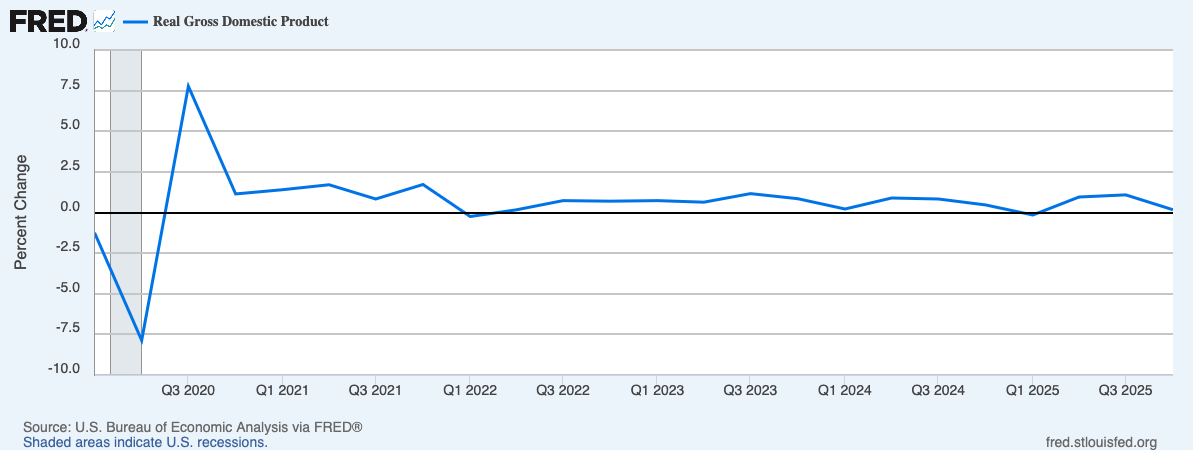
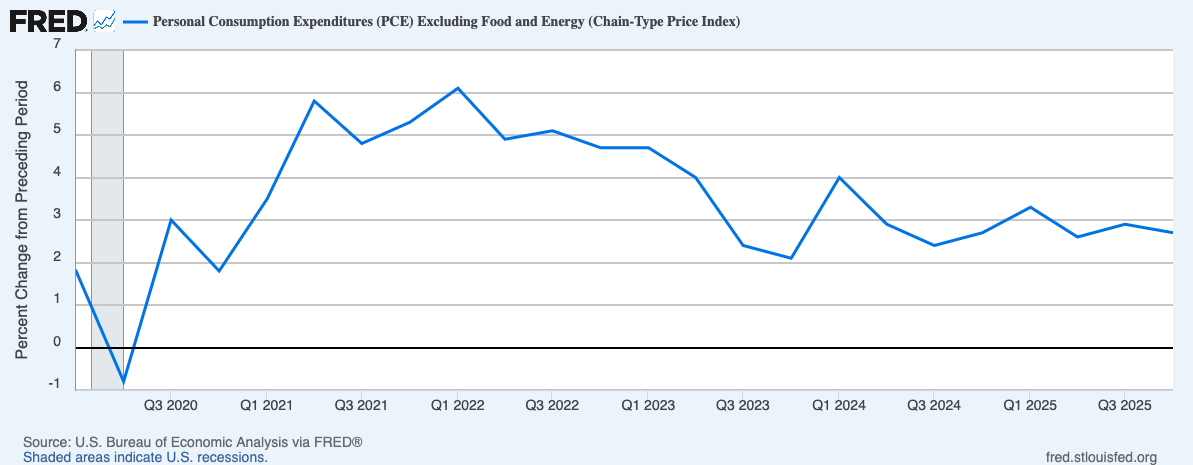
Economists pretty much understand both inflation and recession. Because the policy tools to fight them—raising or lowering interest rates—are the opposite of each other, people sometimes think they are the opposite of each other. But this is not true, which is why “stagflation” is even a thing.
Inflation is caused by the money supply growing faster than the supply of goods and services. Back in the 1970s and 1980s there was a real push to manage the money supply as a way to keep inflation low and stable, but it didn’t work very well. (For a lot of reasons. In particular, the lags between money supply growth and the flow to spending are long and variable. Also, people have choices in where they spend their money, so sometimes the money flows to goods, other times services, and other times assets like stocks, bonds, real estate, etc.) Since the mid-1980s, the Fed hasn’t really considered controlling money supply as a key policy tool.
Recessions, on the other hand, are caused by consumers or businesses choosing to spend less money. The Fed tries to fight this by lowering interest rates. This can work—lower interest rates make it cheap to borrow money to spend. But people can still choose to spend less, even when they could borrow that money really cheaply. This happened very obviously in 2007 and 2008.
When people (or businesses) choose to spend less, the economy slows down. It’s a self-reinforcing cycle. People spend less, so business income declines. Businesses sell less, so they buy less raw materials; they buy less products to sell; they cut employees. Employees lose their jobs, their income shrinks, so they spend less. Commodity sellers can’t sell what they produce, so they stop producing. Businesses can’t sell what they buy, so they quit buying. All those choices flow through the economy, reducing everyone’s income, reducing everyone’s spending even more.
We haven’t seen much of this yet, but we’re about to.
I mention all this now because I just saw this article in the New York Times: We Crunched the Data: There’s a Grocery Price Emergency in America. The writers came up with a model for a fairly affluent middle-class family in the United States, and found that rising prices were crushing it:
According to our calculations, the math has stopped adding up for this family over the past 18 months. They had a small cushion in 2024. Now they are in the red after covering just the basics
People’s reactions to prices that outstrip their income vary. Up to now people have adapted by simply doing what they have to do. They start by making the easiest cuts they can manage, but that doesn’t go very far. You can only make the adjustment from beef to chicken to beans one time. You can quit buying new clothes and make do with what’s in your closet for a year or two, but eventually your old clothes start to wear out. People can quit saving and investing, and they can start borrowing to cover their expenses, but that can’t go on. Eventually, people have to start making structural changes to their household costs, of the sort I talked about all the time when I was writing for Wise Bread: They can become a one-car family. They can move from a house, to an apartment, to a smaller apartment. They can raise the deductibles on their insurance policies.
These sorts of changes have long lead-times. Selling your second (or third) car might take months, and it might not save you much money in the first year or two after you do it. Moving to a cheaper place to live similarly takes months and costs money. Even switching to a cheaper phone plan takes a while. But 18 months is enough time for people to start making these changes. And once they’ve done so, that new lower-spending structure is largely locked in for at least months, probably for years. Even as prices start to come down (and they will, although not to what they were in 2020), people who have made those structural changes to their household cost structure aren’t going to undo them anytime soon.
The result is going to be a recession, very possibly a severe recession, and one that goes on for a very long time. It’s not obvious yet, because businesses are still spending huge amounts of money on things like AI infrastructure, but a lot of that spending is illusory, so it will vanish all at once, rather than gradually.
This wasn’t inevitable. The Fed deserves some of the blame. The Trump administration deserves much more—tariffs and war are what most dramatically hit the cost structures of the typical business and the typical household.
At this point, there’s no good solution for the economy as a whole, because the smart moves by individuals (dramatically changing the cost structure of the business or the household to enable lower spending) all act to deepen the recession. But that is no reason to do anything else but act to bring your costs in line with your income. Going bankrupt will not help the economy.
I’ve talked about artist’s dates many times, so I won’t go on about those, except to say that on Jackie’s birthday we went to the Krannert Art Museum.
Jackie particularly wanted to see the crocheted coral reef exhibit. I neglected to get a picture of the whole thing, but I did get a picture of this sea slug, which I thought was interesting because Jackie knitted a terrestrial slug for Steven for his birthday perhaps 15 years ago.

Here is Steven receiving his slug:
And after that enormous success, Jackie knitted several more slugs:
The left-most (greenish) slug is Sigurdsson T. Slug, my personal slug.
We saw lots of other cool stuff in the museum, but about the only other thing I got a picture of was this awesome snek jug:

Is it not glorious?
Appreciate these day lily flowers with rain drops, and this wet dog (which smells like a wet dog, but that is not captured in the photo).


As someone who uses at least two wearables that gather all manner of biometric data about me, I have considerable concern about just how that data is used. I was pretty pleased with Oura’s old privacy policies; I’m not sure how much their most recent changes have compromised them. I’m not so sure about Google’s policies, but since Google knows everything else about me, I’m not inclined to worry a lot extra about the Fitbit data.
Anyway, this post by Bruce Schneier is interesting:
I have often said that surveillance tech is generally deployed first against people with diminished rights: children, prisoners, military personnel, the mentally impaired. This is another early use case with different dynamics. The surveilled are wealthy and powerful, and—in many cases—unionized.
Source: Professional Athletes and Wearables – Schneier on Security
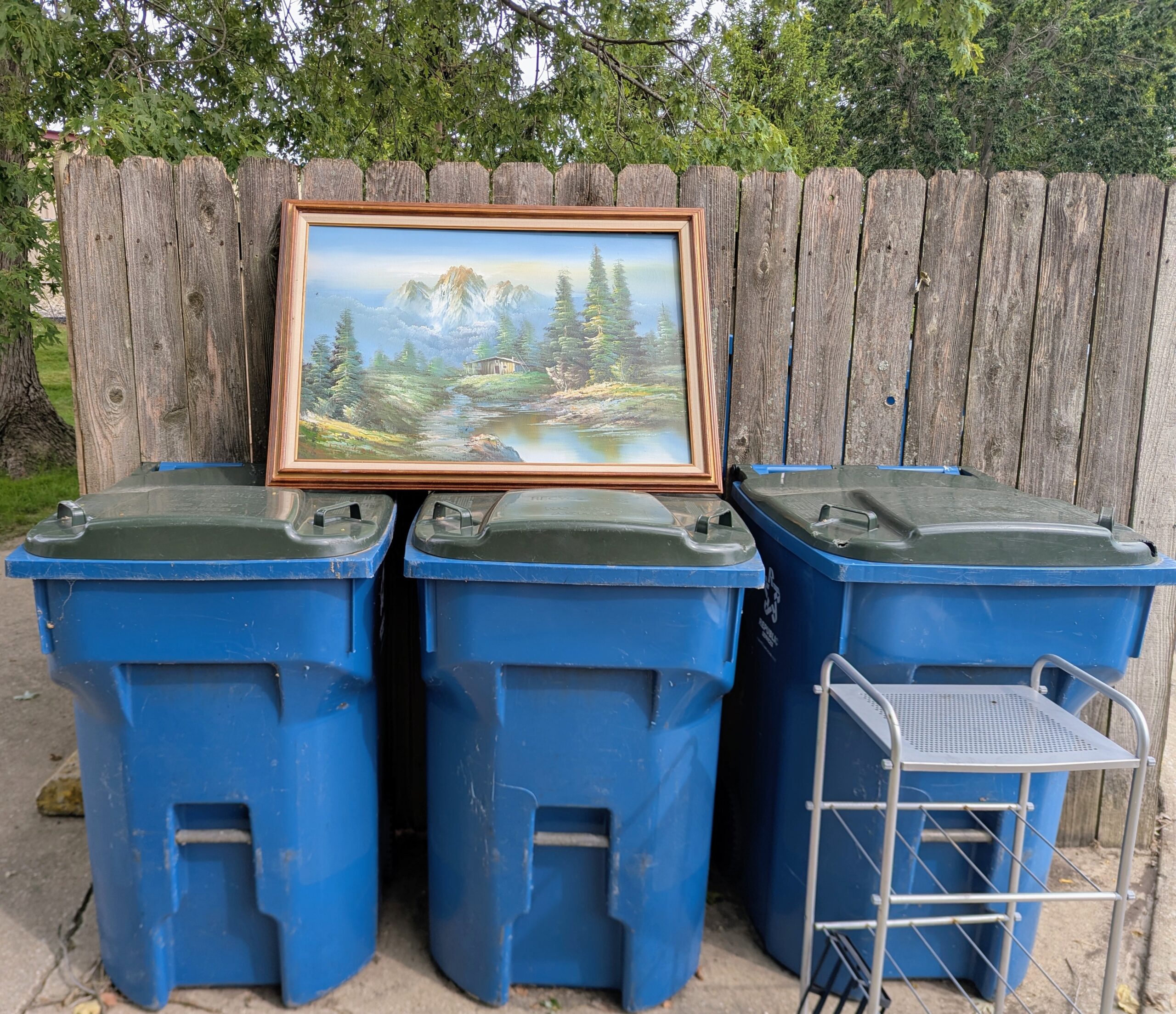
I was out walking Ashley this morning when I saw this painting on top of the recycling bins near my house in Winfield Village.

I immediately thought of a guy (probably this guy) who would buy thrift-store landscape paintings and then add monster to them.
I shared the image above with Steven, who immediately thought of the same guy. (Steven was the one who found that link, before I was even home from walking the dog.)
Isn’t that little lake just begging for a sea monster of some sort standing in it? Or maybe some little cryptids lurking in the trees?

Steven commented while he was visiting on how much fun vole-watching on my patio was.
Ashley thinks so too.
Ashley has caught three voles that I know of (because she was on-leash when she caught them). She may have caught some others on the patio when she was out there off-leash.
One thing that surprised me, because it is so different from our boxers when I was young, was how gentle her mouth is.
Our boxers would promptly dispatch whatever they caught—groundhogs, even raccoons. One shake of the boxer’s head and whatever it had captured in its powerful jaws was dead.
That is not Ashley’s modus operandi. Two of the voles that Ashley captured were released unharmed, after I told Ashley “drop it.” (The third got eaten before I got organized to tell Ashley not to.)
In addition to the three voles, Ashley has caught both one (rather stupid) squirrel, and one (rather immature) robin fledgling. Both of those were released unharmed as well.
I’m not quite sure why. I know some retrievers have very soft mouths, so they can bring back a dead fowl without ruining it. Maybe there’s a gene for that, and Ashley has it? Or maybe it’s just that she was rewarded repeatedly for being very gentle when she took treats from people’s hands?
Whatever it is, I like both aspects of my li’l pupper: truly a mighty hunter, but also a gentle one.
I’m always on the lookout for books that take a more balanced view of sun exposure than “skin cancer bad,” and this looks to be a good one: In Defense of Sunlight: The Surprising Science of Sun Exposure by Rowan Jacobsen
From a review in Nature Briefing:
“One study he mentions analysed the skin of lifeguards at the start and end of a summer season during which they were heavily exposed to the sun1. By summer’s end, their skin was enriched with microbial “beneficial bugs” that protect against UV radiation. A square centimetre of human skin contains millions of microorganisms, some of which produce compounds that kill cancer cells without harming normal ones.”
Source: The best way to start your day? The science backs naked cartwheels in the sun
I mean, really. We know the UV rays are actinic, as are the blue-green rays (tell your brain it’s daytime), and the red and infrared rays (promote healing at various depths of skin and below the skin). I don’t know about all the other wavelengths, but I’m willing to bet that they all do something.
Humans evolved in the sun, and evolved different skin pigmentation that varied with latitude (and, I suspect, varied with other things as well). The idea that our skin can’t handle a perfectly ordinary amount of sunlight is just silly.
As you’ll know if you subscribe to my newsletter (sign up in the sidebar), my brother and I are attending SFWA’s Nebula Award Conference in Chicago.

Today Steven had SFWA board stuff all day, so after breakfast I went to the hotel fitness center for a workout.
Normally I always do a full warmup before a workout. (This is slightly problematic, as too often I just do the warmup, and then need to walk the dog and fix lunch, and end up never getting to the workout.) Today, because the scheduling seemed to work better, I did the workout first, right after breakfast. Then I did my morning exercises in the early afternoon.
That worked out surprisingly well.
One reason it worked out well was that I did most of the workout on new-to-me machines, so I started with reasonably low weights and worked my way up to working weights, which basically amounts to a warmup all by itself. I did:
I forgot to do goblet squats! There wasn’t a leg-press machine, and I kept thinking, “What can I do to work my glutes?” But I didn’t think of goblet squats. I can do those tomorrow, as well as hitting the other machines (leg curl, biceps curl, and chest press are the ones I didn’t do today).
In con-related news, I have successfully registered! I have a name badge, a program, and tickets for a promised book bag.
I’m expecting Steven’s board-related activities to wrap up shortly, and then we’re talking about heading out to a margarita bar. Or, if his thing runs too late, maybe just having a beer here in the hotel.
I personally am very flexible in this regard.

Have you ever seen a more pleasant garden spot than this sterile bit of lawn, concrete, and pavers at the Crowne Plaza O’Hare? There is no seating at all. There are some walls you can sit on, if you’re reasonably tall, but even the lowest bit of wall is too tall for me to balance a laptop on my knees.
I did find one cigarette butt, so I know the space does not go completely unused.
At Aspen Tap House with @stevendbrewer. I’m drinking a Destihl ILL-IPA. He has an Emancipation Plowhorse.

I mentioned a few weeks ago that I’d made two changes to my morning routine: I had quit wearing my earbuds (and listening to podcasts) during my first two walks in the morning, and had started sitting down to write as soon as I got home from the second walk.
I am pleased to report that these changes are working great. I’ve done at least some fiction writing every single day for over three weeks now. Most of it was on a long-form project that I’m pressing ahead with, but I briefly paused to work on a short story (a flash piece?), that made use of one idea from my long-form project that I really liked, but that wasn’t working in the story.
“People with substantial cryptocurrency holdings face grave personal danger, and the physical attacks on their person grow bolder, more violent, and more sadistic by the day.”
Source: Pluralistic: Hold on for dear life (28 May 2026) – Pluralistic: Daily links from Cory Doctorow
Apropos nothing in particular, I just wanted to mention that I own no cryptocurrency assets at all, and (except for a few bitcoin cents that I briefly owned and then lost in 2011 in the hack of mybitcoin.com) I never have.
And, just for the record, I’ll also mention that I don’t think any cryptocurrency asset will ever be a thing of durable value. (This doesn’t mean that blockchains aren’t a useful technology. Just that they make crappy assets.)
My toot reminding people about RSS feed readers got some attention, so I thought I’d re-up this thing I wrote thirteen years ago:
“Finding a great writer is way better than finding a great post.”
Source: Great writers versus great posts | Philip Brewer
However wonderful it is to find a great post, it’s much better to find a great writer. Back in the day when more people used RSS feed readers, it was perfectly ordinary to find a great post, and then click on the writer so you could add their feed to your feed reader.
I’d like to see the return of those days. Use an RSS feed reader again, and when you find a great post, you too can check out what else the writer writes, and if you like their other stuff too, go ahead and follow them.
My brother and I think alike about many things, and differently about many other things. We also sometimes disagree about what it is that we disagree about, which is kind of funny all by itself.
Although we agree about many things, we sometimes actually come at things from quite different perspectives.
Source: Retiring to… Something – Steven D. BREWER

In my brother’s thinking, I “never really wanted to work and pursued a career with the goal of retiring early,” which is both true and false. I hated having a job of the sort where I needed to show up every day, and do stuff that I didn’t find interesting. But I never objected to working. I just wanted the word used correctly. I was delighted to “work” in the sense of producing great works of literature (or art, or philanthropy).
It was never working I objected to. I simply didn’t like “working for the man.”
In retirement I don’t have to do that, and am able to devote myself to work (such as my fiction writing), to the necessary tasks of daily living (such as walking my dog), and to doing things I enjoy for their own sake (such as exercise, and reading).
And although the specifics may be quite different, in this area I think my brother and I are very much in agreement.
I have no shortage of interesting projects I intend to work on in retirement.
A while back someone among our local group shared a link to a set of books they’d found on the internet, with interpretations and drills for Meyer’s Art of Fencing. Word among the local group was that the people behind the books publish stuff “based on interpretations that are… subject to debate,” and suggest taking all of it with a grain of salt.
What caught my eye, though, was not the interpretations, but rather the suggested drills.
They reminded me of the sort of drills you find in a certain class of music texts, where they’re going to go on to the advanced stuff, but they want to make sure you’ve got the basics down, so they’ll have exercises like, “Play every major and minor scale in every key for every octave.” Which, you know, if you can’t do it pretty smoothly, you’re going to have trouble doing the advanced stuff, so you might as well know that right from the start.
And that’s what these drills are like. One is to stand in each guard and cut, thrust, or shift to every other guard. Then take a few quick notes. Did moving from that guard to this or that other guard seem easy and comfortable? Did it seem like it would be useful, or just leave you open for your opponent to take some advantage?
The next drill was to stand in each guard, and then execute each of Meyer’s cuts and thrusts. Again, take some notes. What seemed like it worked?
Drills like that don’t seem like they would depend on the author’s hot takes on anything about Meyer. In fact, they seem great on every level. I can get an idea of what might or might not work. I can get some practice doing each of the cuts and thrusts. I can spend some time standing in each of the guards.
Those are all things I can benefit from.
So I started doing some drills along these lines today, starting with Right Ox and Dempfhau.


I want to get a little lower in my fencing stance, and maybe hold my sword a little more forward, but it doesn’t seem as bad as I imagined.
Although Meyer doesn’t say so anywhere I’ve found, Right Ox is the guard you’d find yourself in at the end of drawing your rapier from a sheath. (Thibault says this, I think.) If your opponent drew before you, the very next thing you might need to do is fend off an attack, which suggests to me that Dempfhau might be very useful. So that’s one thing I drilled: Dempfhau from Right Ox followed by a thrust into Longpoint, followed by falling back down on the sword that I’d dempfhaued, and then moving to Iron Gate or back into Right Ox.
Besides that, I did some moving from Right Ox to several other guards (High Guard, Left Ox, Low Guard (on the right and on the left), Iron Gate, Plow, and Longpoint). I need to look more at the low guards and at plow, but the point of the drill is to start putting in the time, not to already be doing everything perfectly.
I’ve gotten back to writing regularly, for the first time in too long. I’ve made two changes to my daily routine to make this happen.
The first is that I’m avoiding listening to podcasts during my first two dog walks. This lets me use that time walking outdoors to get into the headspace of whatever story I’m working on.
The second is that I’m going ahead and sitting down to write, right after the second dog walk. I’ve known for a very long time that I have to get started writing early, if I’m going to be successful. After second walk is perhaps not idea—earlier might be better—but it’s been working these past few days.

I had been using that time to get started on my morning exercises. But that leads into doing a workout, and by the time I’m done with that the dog is ready for her third walk, and then it’s time for lunch. And that is why I hadn’t been getting any writing done.
Slotting in a session of writing before I exercise is cutting into my exercise time, but maybe that’s okay. Delaying my workout for an hour (or, hopefully soon, an hour and a half) is certainly okay occasionally, and so far I’ve been getting in a reasonable amount of exercise anyway.
First tick of the season. I wasn’t even out in the brush! Just walking along in Winfield Village and in Dohme Park!
Doesn’t portend well for the rest of spring and the summer.

This is my “long” run for the week. It’s very short because my previous long run (of a bit over 4 miles) left me worn out for 6 days.
Assuming I recover okay from this one, it’ll start the new standard I can build on for ramping up long runs over the summer.
Came to 3.32 miles in 47min 58s.

“Higher Gas Prices Are Hitting Lower-Income Americans the Hardest”
—Latest headline from the petroleum economics journal “Duh!”

All over Europe, farmers are parking their tractors on bridges, in front of fuel depots, and across from government offices, to protest government policies that are making the economics of being a farmer completely untenable.
It’s not happening so much in the U.S. At least not yet. I guess, as long as people are willing to pretend it’s not welfare, farmers are willing to take government money—even as their livelihoods are being destroyed.
But…
But emergency checks are not farm policy. And without a permanent Farm Bill, the next drought, the next bad harvest, the next crisis, won’t have a safety net waiting — just another extension, and another prayer.
Source: Where’s the Smoke? – Offrange
Sorry not to have gotten a picture of the dog.
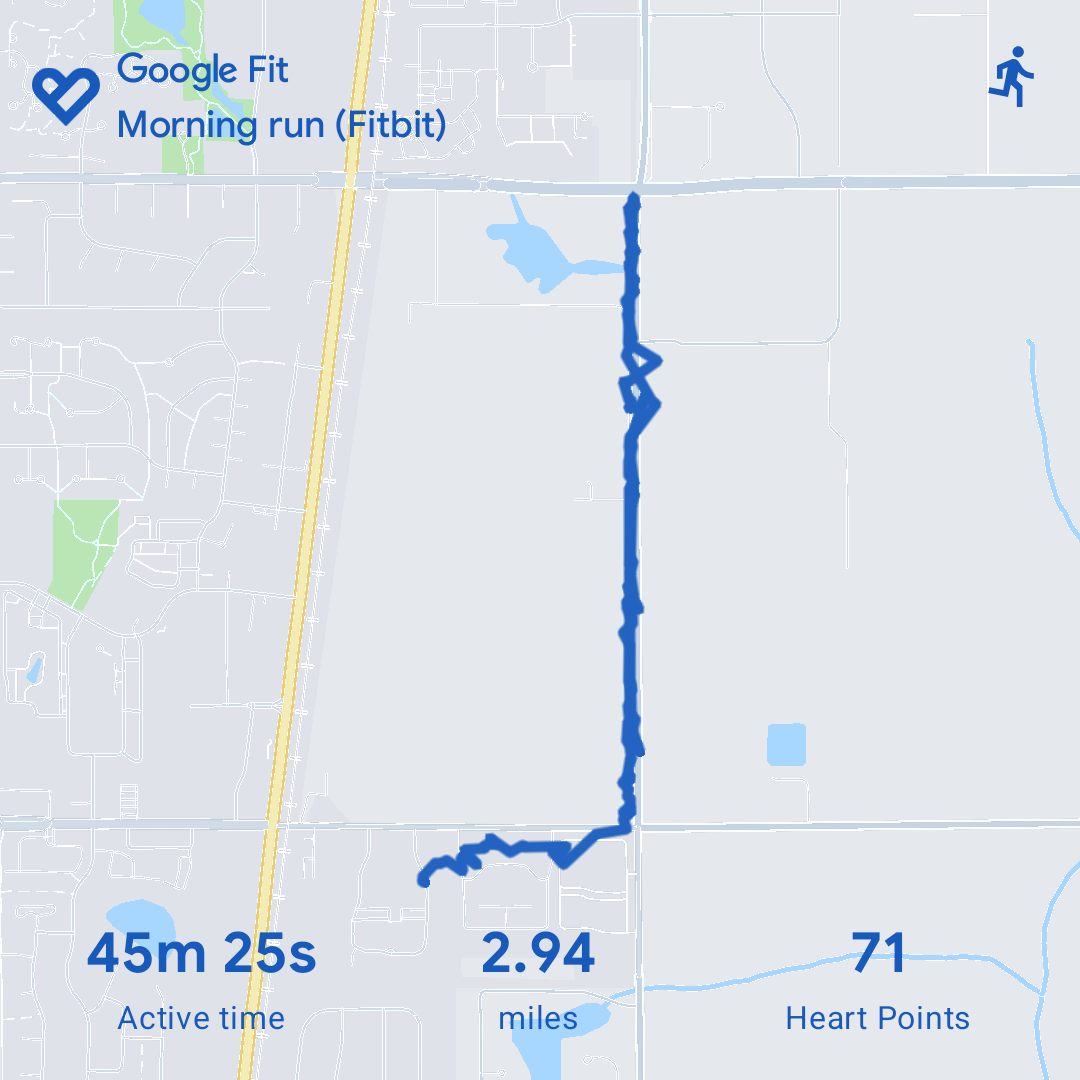
Run was 2.94 miles. Kinda slow, even for me. (That is, I’m a very slow runner, but running with the dog I’m even slower, because she needs to stop and sniff, and stop and pee.)
Still, very pleasant, and no doubt good cardio.

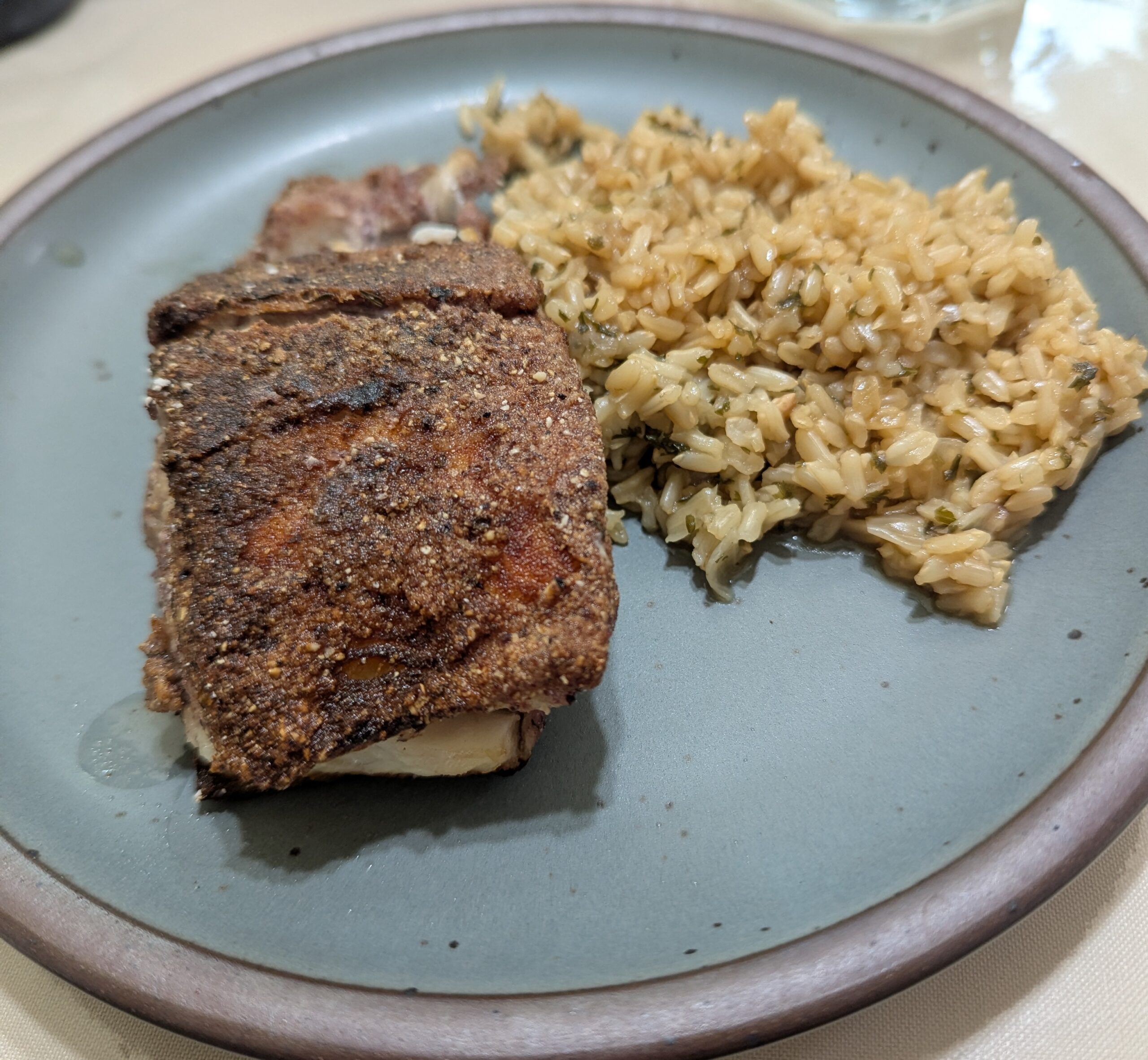
Blue corn battered black cod with brown rice. Batter is half blue corn, half all-purpose flour, and has paprika, black pepper, thyme, and just a touch of cayenne pepper.

I have been meaning for a while to write about how I seem to need more recovery from exercise now than I did five or six years ago. Back in 2020 I could do a hard workout one day, take one rest day, and then come back and do another hard workout. This year I seem to need more rest days to recover. A couple of times recently, I seemed to need six days to recover from a hard lifting session or a long run.
When I mentioned this to my family I got back a chorus of variations on “Getting old sucks.” And it is entirely possible that my recovery capability took a dramatic hit between age 60 and 66. But I didn’t want to just assume that it was aging. I wanted to see if I could figure out if that was actually true.
(I mean, I know that there are a bunch of other changes between than and now that might make a difference in how much recovery time I need. One is that I walk my dog a lot. Although I don’t count those walks as “workouts,” they are still physical activity that requires some amount of recovery. I didn’t have a dog in 2020. I walked plenty then too, but I didn’t go for a long walk every day. Probably only once a week did I walk as far as I do almost every day now. Another is that now I’m trying to train for sword fighting. Those training sessions aren’t usually extremely intense, but sometimes they are, and they’re also somewhat unpredictable, meaning I can’t always line those sessions up with days when I’m ready for a hard workout. Plus, they’re fun—which makes it much easier to end up overdoing it.)
Fortunately, I have my workout logs from 2020—starting right before the pandemic, when I rediscovered the fact that consistency beats intensity when it comes to exercise, and then from the couple of years after that, when the ongoing pandemic meant that I didn’t have to do anything else, and could just exercise as much as I wanted.
I have at least two ideas about things I might do to analyze this:
So, I did take a first look at those logs, looking to see how much exercise I was doing for the first 30 or so weeks starting right before the pandemic, and how much recovery I was getting. I remember thinking at the time that I should aim for a workout every other day, accepting the reality that I’d occasionally miss a day, and end up hitting about three times a week, which seemed like a good goal. It turns out that, during this period of initial consistency, I was getting in almost three workouts per week as intended: 2.89 ± 0.83 workouts. The numbers showed a slight upward trend, with a few weeks with 4 workouts and almost none with just 2 in the last few weeks.

So that’s a first thing to try: Exercising roughly every other day, rather than overdoing it for several days and then needing several days to recover.
Every-other-day isn’t the only good workout schedule. Since I like working out, I kind of like exercising almost every day. Separately from that test, maybe I can come up with a six-day-a-week schedule that doesn’t overdo it: Just one or two exercises per day, focusing on different muscles, different body parts, and different energy systems from one day to the next.
I have so many things to try! (Along with trying not to overdo it.)

Prompted by EFF, I sent the following message to my representative:
I strongly oppose government surveillance of U.S. citizens, so I’m asking you to please vote no on any bill that includes a clean reauthorization of Section 702. Real reform is possible and has more support than ever. Several bills would do much to rein in Section 702 surveillance and protect Americans’ privacy, and do so without hurting national security.
We live in a globalized society in which Americans are constantly communicating with people overseas. The Federal Bureau of Investigation (FBI) has proven many times over that they cannot be trusted with discretion to warrantlessly query communications collected under Section 702 of the Foreign Intelligence Surveillance Act. Americans should not lose their constitutional rights to private communications because of a mass surveillance authority that provides federal law enforcement with backdoor access to them.
Please, reform Section 702.
I urge you to urge your representative to work to reform section 702. Here’s a place to start:
For no reason I can understand, markets seem to think that (with the cease fire with Iran) things are going to return more or less to normal, more or less immediately. This is false. It is not just false, it is so far from the truth that I don’t understand why way more people aren’t panicking.
There are so many problems with oil supply delivery right now—so many more than just the Strait of Hormuz. A lot of oil and gas production infrastructure is gone. A lot of oil and gas distribution infrastructure is gone. Even where the production infrastructure is still there, since there’s no way to ship out what is produced, production is being shut in. Production that has been shut in will take weeks to get started again. And it won’t be started again until it can be delivered.
At the same time, shipments of oil and gas that came out through the Strait just before it was closed, are probably only now reaching their destinations—meaning that it is only now that refineries are finding themselves without their next input for refining. The refining facilities are going to have to shut down. And just like the production facilities, it will take weeks to get them started again. And they won’t be started again until the people who run them foresee reliable, steady deliveries of crude.
These effects are already obvious in the observed spread between spot prices (the cost of a barrel of crude to be delivered right now), which are high (although not as high as I think would make sense), and futures prices (the cost of a barrel of crude to be delivered in a month), which are also high (but not nearly as high as I think would make sense).
The same is true (with various differences in details) with helium, nitrogen for fertilizer, aluminum, and who knows how many other commodities that used to come though the Strait.
This all matters because the knock-on effects are going to be huge. Higher fuel prices—much higher, and for much longer than the markets are currently anticipating. Higher food prices, due to the shortage of fertilizer reducing food production, especially of corn—which is a major input to both meat production and to ethanol production, meaning another way it feeds-through the higher energy prices. Higher helium prices feed through to shortages of computer chips—which were already under strain due to AI-related data-center demand.
In the background of all these are Trump’s tariffs from a year ago, the impact of which was eased in many different ways (the pause, various rate cuts, firms stocking-up ahead of the imposition of the taxes, the supreme court decision ruling that the worst of them were illegal), all of which delayed the main impacts for months. For some reason, the markets seem to think that those impacts would quit showing up in comparison to the year-ago numbers (since the tariffs were announced one year ago), but in fact are probably only now fully showing up in reported numbers.
My take on all this is that every aspect of the economy is going start getting bad, and then going on getting worse. The getting-worse phase will go on at least for months and months, and very possibly for a year or two or three.
Inflation spiked up to 3.3% last month, but that is only the start. That’s just the energy-price spike. As soon as those effects feed through to other prices, they’ll all go up. And as soon as those high prices start forcing people to cut back on other spending, we’ll see at least a recession, and very possibly worse than that. And that’s all before actual shortages or fuel and food start impacting every aspect of people’s lives.
Oh, and as I’ve said before: Don’t imagine that having some idea about what things are going to be higher-priced or in short-supply gives you the sort of insight that will let you invest to make money off these circumstances. The real-world impact of these things are going to be chaotic enough that any particular investment could go very badly wrong, even if your understanding of the general direction of events is correct. And, of course, the government is going to trying to protect their supporters (oil companies and tech billionaires, mostly) so they may well be bailed out. Any investments that suppose that things will go badly for them in particular may well go spectacularly awry.
Most members of my HEMA club have painted their fencing masks in some way that’s meaningful to them.
I had long wanted to do so, but the thing I wanted to paint—the face of a sloth—was going to require at least three shades of brown, which I feared might be difficult to find. But when I finally went and looked on Amazon for acrylic paint markers, I found a set of acrylic markers in 12 different shades of brown!
I ordered them, they arrived yesterday, and I have painted my mask:

My brother confirms that I have met my goal:
Recent news is that a contingent of ground forces have arrived in Iran. The markets still seem expect that Trump will chicken out (which seems likely) and that things will return to normal in the Gulf (which seems very, very unlikely).
My most hopeful guess at this point:
All my other guesses are similar, except that my scenario is preceded by a step 0 in which a bunch of U.S. soldiers and marines are killed while failing to reopen the Strait.
The U.S. has supposedly provided a “15-point plan” to Pakistan which has supposedly passed it on to Iran.
I have no idea what’s in that plan, nor what Iran’s reaction has been. But I do have some ideas about what would be a reasonable response by Iran. If I were in their shoes, this would be my starting point for negotiations:
Now, I wouldn’t expect the U.S. or Israel to agree to all that, but it seems like a reasonable starting point for negotiations.
Trump is such a moron for having put us in such a situation. And he’s such a crappy negotiator, that I suspect we’ll end up with something very much like that before the war is over.
Oh, and I’m upgrading (downgrading?) my stagflation forecast to be more inflationary and more recessionary than I’d been assuming.
Just a few days after the equinox, and already you can see that the sun is rising north of due east.

A pretty good run! 4.01 miles in 1h 5min 55s, for an average pace of 16:25 and an average HR of 140 bpm. I don’t auto-pause the run tracking, so if I’m running a 14-minute mile (still pretty slow) and stop for 2 minutes to take a selfie for the blog, that shows as a 16-minute mile.

I just heard a teaser for a story on how PDFs have become ubiquitous, with the supposed downside that AIs have a lot of trouble reading a PDF. The implication was that was bad, but I thought “Awesome! I’m going to have to switch to PDFs for more of my output! Oh, and I think I’ll start using TeX to produce more of that output!”
If you’ve ever read the contents of a PDF file produced by TeX you’ll understand.

Ashley is pleased with her new toy, but perhaps not as pleased as Jackie. 🐕

I’ve known since before the inauguration that the economy was facing stagflation. The tax cuts would boost the deficit, raising interest rates. The tariffs would boost prices, producing inflation. Both those things, plus forcing out immigrants, would tank the economy, producing stagnation (at best), yielding stagflation.
I wrote about this more than a year ago, in Our new upcoming stagflation. We are now seeing it, even before the war started.
I’m actually a little surprised we didn’t see it sooner. I credit the delay to a few things. First, Biden had left the economy in really good shape. It took a lot to tank it. Second, even though it seemed to us that Trump was “moving fast and braking things,” it’s just hard to move that fast on things like tax cuts, imposing tariffs, and deporting migrants—even if you’re willing to break laws to do it faster, these things take time. Third, Trump always chickens out, so we didn’t get the threatened tariffs on schedule; we got watered down tariffs after a delay.
However, the stagflation is here. Check out this graph of Real GDP. As you can see, in Q4 it had fallen almost to zero. The economy wasn’t shrinking, but it was stagnating.

At the same time, inflation had quit coming down. Here’s a graph of Core PCE, the Fed’s preferred inflation index. After getting down almost to 2% (the Fed’s target) about 8 months ago, it reversed course and has been bumping along close to 3% since then.

I think all of these things were about to get worse. Even with the Supreme Court’s ruling that a major part of Trump’s tariffs were illegal, there were plenty of others that aren’t going away. The tax cuts are still in place. Immigration has virtually come to a halt, many immigrants have been detained or deported, and any sensible foreigners with skills that they can apply elsewhere are fleeing the country.
So: Stagflation was already here. But things are about to get much, much worse, because now there’s a war on.
That has already spiked up oil prices. Those won’t feed immediately into Core PCE (which excludes food and energy prices), but will feed in over time, because higher energy prices make everything we produce more expensive. And, of course, wars are fantastically expensive, meaning that the deficit will blow out way worse than it was already going to, which will lead to higher interest rates (soon) and higher taxes (later).
Oh, and don’t expect AI to save us. If you listen to the business news, you know that the only reason the economy isn’t in much worse shape is that businesses have been paying huge amounts on AI infrastructure. As I wrote in my AI bubble post, I think a large fraction of the data centers and model training that that money got paid for will turn out to be worth much less than was paid for it.
So, where are we? Well, about where I thought we’d be, as far as the economy goes—in a modest stagflation that could be fixed pretty quickly, at the cost of a substantial recession, if the Fed had the guts for that. Except that now we’re in a war too.
I can tell you how to arrange your finances to survive a stagflationary period, but I can’t tell you have to survive a war. Wars are very bad, much worse than recessions.
If you know how to survive a war, let me know. If not, good luck.
When I was 2 years old, I was in the hospital twice with digestive issues, and came out with a diagnosis of celiac.
This was in the very early 1960s, when nobody knew diddly squat about celiac, and there were no gluten-free baked goods, and no indications on labels or menus that all kinds of ordinary things in restaurants and grocery stores had gluten in some form or another. My mom did the best she could to avoid giving me things with gluten in them, and taught me to explain to people who were trying to feed me that I couldn’t eat wheat, oats, rye, or barley.
I think nowadays people think that oats don’t have gluten, but we didn’t know that then, so we did our best to avoid all of them.
I ate this half-assed gluten-free diet until 1976, when went away for 6 weeks to a National Science Foundation summer program. I was living in a college dorm and eating in a college cafeteria, and found it too difficult to follow my diet. I found that my digestion was about the same as before, and just quit worrying about staying gluten-free. (Until I got married, and my wife thought that, if I had celiac, perhaps I should avoid gluten. And it was much easier in the 1990s to find gluten-free food.)
Fast-forward another decade or so. Blood tests for the antibodies to gluten became available. I got those tests done, and discovered that I’d never had celiac.
So, one thing I like to do these days is hark back to having to avoid “wheat, oats, rye, or barley,” and subvert it, by baking bread that contains wheat, oats, rye and barley.
Which I did today:

In the years that I was particularly suffering from season depression in the winter months, I found various things that helped. (Click the SAD tag to see various posts on the topic.) One thing that was kind of in the middle in terms of both value and effort was taking myself on an Artist Date. (There’s an Artist Date tag as well.)
Lots of different things can quality as an Artist Date, of course, but I usually used the term to refer to going to someplace (anyplace) that I found inspired me. At the top of the list, because there’s already art, which helps me get into the right frame of mind, is to go to an art museum or an art gallery. But almost as high is going to a natural area, or some place like the Japanese Garden at Japan House.
I haven’t been particularly depressed this winter, but the Krannert Art Museum had an exhibit of textile art that Jackie wanted to see, so we decided to make an artist date of it. On a whim, we added the Conservatory, which has a greenhouse with a bunch of tropical flowers, and is always nice to visit in the winter, because it’s warm and sunny. (Sunniness, of course, depends on the sun being out.)


It’s hard to get a good picture of the art museum, except by just taking pictures of individual works of art, which I don’t like to do (out of courtesy and for copyright reasons), but I thought this one was valid:

There was a term (that I have already forgotten) for having numerous paintings covering the wall, rather than a spaced array of individual paintings.
And this one was produced as part of the WPA’s Federal Arts Project, by artists who were paid a modest wage to make art that belonged to the government (and all such work is copyright-free):

As I said, I wasn’t really depressed, so it didn’t so much matter that the Conservatory greenhouse gave of a clear view of the complete lack of sun:

Still, I’m feeling just a little inspired.
For the first couple of years I was doing longsword, I had real trouble keeping my arms extended and pushing my hands up (due to a lack of strength, lack of endurance, and lack of the habit).
I did all manner of training to work on this—exercises for arm strength, especially overhead pushing, endurance training for those same exercises, and of course sparring to train the habit. (See in particular Fitness training for longsword.)
I’m not there yet, but it no longer seems to be my worst problem. Here’s a sparring match with one of the better fencers in our local group:
I’m not quite all the way there, so it’s a thing to keep paying attention to, but it’s no longer my biggest problem.
A pretty good recent episode of Gil Duran’s Nerd Reich podcast had an odd hole in it.
In the one I’m talking about, the one with Quinn Slobodian, Quinn explains that there’s a reason the many efforts to create a seastead, charter city, network state, and such never go anywhere: They’re unnecessary.
[Y]ou don’t actually need to create a new polity to have your own sense of entitlement and privilege reinforced in every imaginable way, and to have your own economic comfort facilitated by the institutional arrangements of the state in almost every way. With some creative accounting and some use of offshore havens and trusts and so on, you can really game the whole thing very well already, right?
Having said that, they do talk a bit about why, given that there are already tools to protect your property and money (freeports, trust, special economic zones, and the like), anybody would work so hard and spend so much money to create an actual place that’s outside the control of any government. They don’t quite come around to answering that question, which I think is unfortunate, because I think they both know the answer.
The people pushing these efforts want serfs.
They don’t want workers who can join unions. They don’t want software engineers who hesitate to create autonomous munitions or tools for surveillance capitalism. They don’t want maids or pool boys who feel free to resist their advances.
They want the right to be mean to people, in a situation where the people have to just take it.
That’s what places like Próspera offer that you can’t get from a family company incorporated in a special economic zone.
Stephen Miller would have ICE agents (and the rest of us) believe that they have “immunity” to perform their “duties.”
This is, of course, false. Depriving any person (not just citizens) of their rights “under color of law” is its own crime. But it is in that light that we should view their position on face masks as admitting that they know they have it wrong:
The administration’s perceived need for face coverings evocative of Iranian secret police and Russian security agents helps us recognize that assertions of state supremacy and citizen insignificance are claptrap…
Source: All the king’s masked and anonymous henchmen
If they were immune, they’d not hesitate to show their faces. The fact that they feel the need to keep them hidden makes it very clear that they know they’re totally exposed in a legal sense.
Ten years ago, instead of taking Jackie out to a restaurant and sitting with a bunch of other couples wanting to overpay to order off a “special” Valentine’s Day menu, I decided it would be more fun to cook her my own little feast.
As my inspiration, I reached back to October, 1991, and the very first meal I ever cooked for her. (She was threatening to go home because she was tired, and I said, “No! Stay here! I’ll fix dinner! You can just take a nap and I’ll do everything!”)

Some of the details have varied (the flourless chocolate cake was new maybe 4 years ago), but rock cornish game hens and long-grain and wild rice have always been there.

Okay, this is really, really good. About writers and writing (via @doctorow).
Makes me want to write some proletarian literature.
Characters in proletarian literature are often misled into believing that their individual flaws account for their miserable conditions, but then encounter a union organizer or a wise old Wobbly who tells them the truth, setting fictional men and women on the revolutionary path.
Source: Go Left, Young Writers!
Although it has gotten a bit sunny now, it was very grey at dawn and for a good hour thereafter, so I think we are guaranteed an early spring.
I couldn’t be bothered to take a boring picture of the grey, so instead here’s a picture of moonrise from yesterday’s last dog walk:

Three or four years ago I got a pair of LL Bean Cresta pants, which proved to be very satisfactory hiking pants: Fit me, okay in rain or wind, sturdy enough, excellent pockets for hiking.
(They turned out not to be sturdy enough to stand up to the depredations of a puppy, but that’s neither here nor there.)
That winter I bought a pair of Crest lined pants, which turned out to be similarly excellent: All the things I liked about their summer pants, plus nicely warm, without being so bulky or so insulated as to be a problem.
I’ve had them for a couple of winters now, but until this year, I didn’t actually wear them much. It’s quite typical to have two or three or four really cold days in a winter, maybe even two periods like that. But really, one pair of lined pants nicely does the trick. I wear them for my dog walks until the cold breaks. Then I wash them, and they’re available for the next cold snap.
This year has been different. Cold, cold, and more cold. More than a week ago I looked at the forecast, and realized that I’d be better off with a second pair of these pants.
So, I ordered a second pair. They came yesterday. So last night I put my previous pair in the laundry and today I wore my new pants for my first two dog walks.
Once again, most satisfactory.
(It’s too hard to take a selfie that includes my pants, so instead here’s a picture of Ashley. I wanted to give her neck a good scritching, so I took her collar off, so she’s all naked.)

Jackie and I started baking sourdough long before the pandemic, baking a loaf pretty much every week since the early 1990s.
Today’s loaf: citric acid, ascetic acid, salt, diastatic malt powder, olive oil, honey, oats, bread flour, prairie gold whole wheat flour.

This is exactly right, and we’re all going to suffer for it (along with all the other things we’re going to suffer for because of Trump).
The best summary of Trump’s trade “philosophy” comes from Trashfuture’s November Kelly, who said that Trump is flipping over the table in a poker game that’s rigged in his favor because he resents having to pretend to play the game at all.
Okay, I’m going to tag this “allegedly funny,” because that’s the tag I’ve got for this sorta stuff. But this is legit funny:
Instead, FEMA staff have been encouraged to use terms like “freezing rain” in their public messaging, the sources said.
Source: Don’t say ‘Watch out for ice’: FEMA warned storm announcements could invite memes | CNN Politics
Let me just say, I am 100% down with taking a snow day, but calling it a general strike.

There’s a broker offering a new product, that I’d have been all over 30 years ago. I think they’re calling it a “generated asset,” where they create a personal stock index just for you (based on a prompt to an AI), and then create an imaginary index fund for that imaginary index, and then (I assume) invest in the underlying stocks on your behalf.
Of course, you could do that yourself, but it would be awkward, probably expensive, and definitely fiddly, with a need to track the index over time.
So, instead of that (I assume), the company just promises to pay you the value of your index, and (I assume) hedges its promise by holding the underlying shares—and since this synthetic investment is a service, they can lump all these promises together and invest in all the underlying shares, and be generally sure that their hedge will be close enough that even very large stock moves won’t cost them more than investors are paying for access to this service.
As I said, I’d have been all over that 30 years ago. Now, not so much. I’ve gotten lazier and more conservative with my investments as I’ve gotten older.
But it did make me think what I’d want to invest in, if I were to create a synthetic index, and it occurred to me that the companies that are putting the least amount of money into AI crap will do much better over the next few years. So I asked confer.to if it could give me “a list of large corporations ordered by how much they talk about AI in their reports to investors.”
Sadly, the answer was no:
Based on the available data, I can’t provide a specific ranked list of large corporations ordered by how much they discuss AI in their earnings reports. While the information confirms that AI is a major topic in 2025 earnings calls across the S&P 500, the detailed company-by-company ranking you’re looking for isn’t publicly available in the sources I checked.
Here’s what we do know:
- AI is a dominant topic: In Q3 2025, “AI” was cited on 306 S&P 500 earnings calls, the highest number in the past decade.
- Significant increase: This is a large jump from the five-year average of 136 mentions and the 10-year average of 86.
- Sector leaders: The Information Technology (95%) and Communication Services (95%) sectors have the highest percentage of companies mentioning AI.
- Market impact: Companies that mentioned AI in their Q3 2025 calls saw a higher average stock price increase (13.9%) compared to those that didn’t (5.7%) since the end of 2024.
While sources like Yahoo Finance and MacroMicro track the overall trend and volume of AI mentions, they don’t publish a specific, ordered list of corporations ranked by the frequency or depth of their AI discussions in earnings reports.
This type of granular, ranked data is typically compiled by specialized financial data and analytics firms (like FactSet, which provided the data to Yahoo Finance) and is often part of a paid subscription service.
Perhaps the specialized AI tool that this broker uses to create its imaginary indices has access to the fine-grained data about AI mentions in earnings calls with investors. But I don’t care enough to go to the trouble of looking.
Poking around at the St. Louis Fed’s Fred graphing tool (to come up with a graphic to include for this post), though, led me to the graph at the top, which is of the “Nasdaq Global Artificial Intelligence and Big Data Index,” which “is designed to track the performance of companies engaged in the following themes: Deep Learning, NLP, Image Recognition, Speech Recognition & Chatbots, Cloud Computing, Cybersecurity and Big Data.”
So one option to get what I want would be to just go short on that index.
I don’t think I’ll do that either.
Turns out Cory Doctorow and I think a lot alike about the AI bubble, but he also has stuff to say about how to speed along the popping of the bubble, which would be a good thing. (Bubbles that pop sooner do less damage when they do.)
so I’m going to explain what I think about AI and how to be a good AI critic. By which I mean: “How to be a critic whose criticism inflicts maximum damage on the parts of AI that are doing the most harm.”
Source: The Guardian
My father was great. This post isn’t really about all that, though. It’s about one (or two) specific things my dad did that have proven to be very beneficial to me.
One was that my dad was big on looking at things. I assume this mostly came from his being an ornithologist, which to a great extent involves looking at little tiny things some distance away.
He was always encouraging me to look for and look at things in the distance. On long car trips he’d often encourage me to watch for things like the water towers with the names of each town we were approaching. I’m sure part of that was just to keep me occupied with something other than complaining about being in the car, but part of it was getting me good at watching for things coming over the horizon, a skill that has proven itself of great value, even though I’m not a fighter pilot, or a lookout in a ship’s crows nest.
The other thing, closely related, was my father’s enthusiasm for praising specific things, of which this was one. Anytime I’d spot something early—especially if it was earlier than he did—he’d say, “Good eye!” He did that a lot when I was a boy, but he never really stopped. I remember just a few years before he died, I spotted a Hooded Warbler outside the house where he was living in Kalamazoo and drew a “Good eye!”
Even though I don’t have kids, I try to do this with other folks around me. A little praise never hurt anyone, and being able to spot things in the distance is always useful.
See the horse in the picture at the top? Maybe this will help a little:

This time Ashley and I both found our place in the sun.


Back in May, I wrote an article about AI journaling. The idea (which I had stolen from some YouTuber) was that you write your journal entries as a brain dump—just lists of stuff—into an LLM, and then ask the LLM to do it’s thing.
. . . ask the LLM to organize those lists: Give me a list of things to do today. Give me a list of blind spots I haven’t been thinking of. Suggest a plan of action for addressing my issues. Tell me if there’s any easy way to solve multiple problems with a single action.
Now, I think it’s very unlikely that an LLM is going to come up with anything genuinely insightful in response to these prompts. But here’s the thing: Your journal isn’t going to either. The value of journaling is that you’re regularly thinking about this stuff, and you’re giving yourself a chance to deal with your stresses in a compartmented way that makes them less likely to spill over into areas of your life where they’re more likely to be harmful.
I still think that’s all true, and I still think an LLM might be a useful journaling tool. My main concern had to do with privacy. I didn’t want to provide some corporation’s LLM with all my hopes, dreams, fears, and best ideas, and hope that none of that data would be misused. I mean, bad enough if it was just subsumed into the LLMs innards and used as a tiny bit of new training data. Much worse if it was used to profile me, so that the AI firm could use my ramblings about my cares as an entry way into selling me crap. (And you know that selling you crap is going to be phase two of LLM deployment. Phase three is going to be convincing you to advocate and vote for the AI firm’s preferred political positions.)
Anyway, I figured it wouldn’t be long before local LLMs (where I’d actually be in control of where the data went) would be good enough to do this stuff, and I was willing to wait.
But I didn’t even have to wait that long! A couple of days ago, I saw an article in Ars Technica describing how Moxie Marlinspike of Signal fame had jumped out ahead with a really practical tool: confer.to. It’s a privacy-first AI tool built so that your conversation with the LLM is end-to-end encrypted in a way that keeps your conversation genuinely private.
I’ve started using it for journaling exactly as I described. Because of the way the privacy is inherent to Confer, I can’t actually keep my journal within Confer—all the content is lost when I end the session. So, I’m keeping the journal entries in Obsidian, and then copying each entry into Confer when I’m ready to get its take on what I’ve written.
I wanted some sort of graphic for the post, and asked Confer to suggest something. It came up with 5 ideas, including this one, which (bonus) actually illustrates my process:

Anyway, I’ve already written three journal entries that I otherwise wouldn’t have, and gotten some mildly entertaining commentary on them—some of which may rise to the level of useful. We’ll see.
(Asked to comment on a previous draft of this post, Confer.to mentioned the “Give me a list of blind spots I haven’t been thinking of,” prompt above, and said, “But LLMs can’t actually know your blind spots — they can only reflect patterns in what you’ve said.” Which I know. And so, of course, once I started using an actual AI tool instead of just an imagined one, that ended up not being something I asked for.)
If I keep doing this (and I think I will), I’ll follow up with more stories from the AI-enhanced journaling trenches.
Next weekend is going to be pretty cold in Minneapolis. Maybe cold enough to convince some ICE goons that they’d be better off on disability in Kentucky.
I mean, every ICE goon has probably slipped on the ice at least once. Probably every one of those falls could be turned into a disability claim.
I am (just barely) old enough to remember the Black Panthers in the 1960s, when a group of black people tried to carry legal firearms to protect themselves, before they were mostly murdered by the police, the FBI, and one another.
I also remember the 1980s, when the NRA was trying to convince all marginalized groups (blacks, women, lesbians, gays, socialists, etc.), that arming themselves was a great idea. The NRA was sincere, I think—they just wanted more people to have guns.
Most people, especially black people, were well aware of the fact that walking around armed would make it much more likely that they’d be killed by the police. (They remembered what happened to the Black Panthers, presumably better than I did.)
Over the last couple of years, and especially over the last few days, I think perspectives are changing. First, a lot of white people are walking around armed, and even killing people, with minimal consequences. Second, the increasingly fascist police have been killing unarmed people at increasing rates, and looking like they’ll not only get away with it, but looking like they’re glorying in it.
There are definitely some black people thinking once again that being armed is a good idea. I hope they’re not horribly wrong about that.
This article, which had a really annoying headline, turns out to have some really great thinking.
In particular, the political perspective it is describing has more than a little overlap with the stuff I was writing about in my articles at Wise Bread.
An economic vision that … encompasses antimonopoly policies, right to repair and regulatory changes to smooth the path for people to start businesses, buy and work land, even build their own houses and invent things.
Source: NYT
Steven suggested that I should revisit my Wise Bread posts. There’s a lot of useful stuff there. It was stuff that had seemed a bit less relevant over the last few years (I started writing in June of 2007, right at the start of the Great Financial Crisis, and carried on for 10 years.) But with government having gone all-in on fascism, racism, and gangsterism this year, a lot of those themes are feeling much more on point than they had for a while.
So I think I’ll do that. A lot of my Wise Bread posts still feel just right. On a few, my perspective has changed a bit. I’ll write some new posts to talk about what’s changed.
Stay tuned.
I am low-key a fan of lapel pins, so I’m delighted that my HEMA club, Tempered Mettle Historical Fencing, now has some for sale. They’re even cheap!
I’ll put this on my sport coat shortly, but I wanted to get a photo first.

In the latest news from the Urban Management journal Duh:
perhaps we need to thin the fuel of the community itself.
Oh, sorry, I meant the latest news from this opinion piece in the NYT: Which City Burns Next?
I mean, I understood this in 1986 (as I described in this post, about why I moved out of Los Angeles).
The footpath along First Street between Windsor and Curtis has some extra-fancy lights. They’re usually fairly dim, to minimize light pollution, but they have motion detectors that cause them to brighten if someone approaches.
Is he able to smash open clams on his belly with stones?
He otterbee!